
HUAQING


Email: huaqingwj@21cn.com


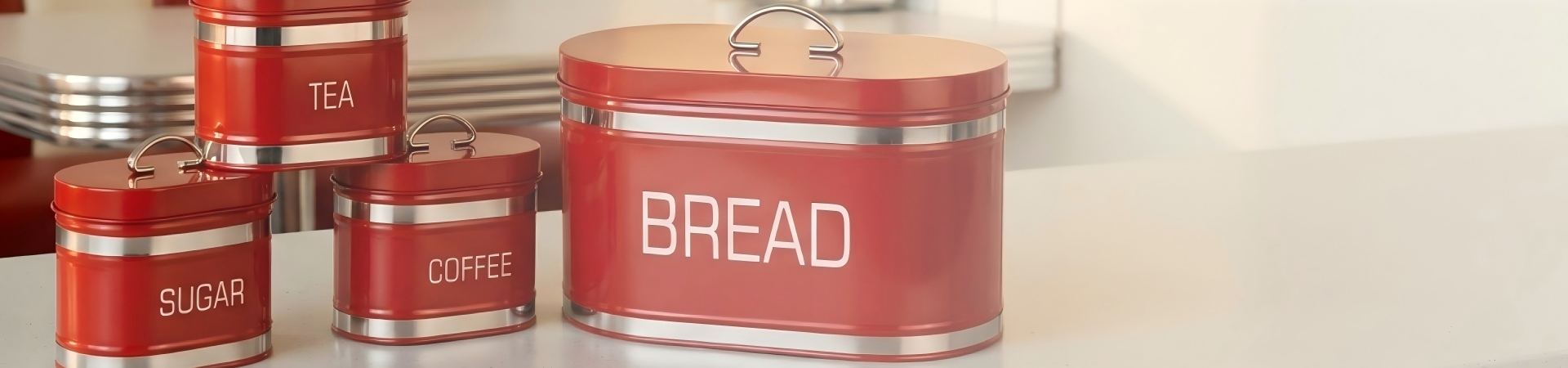
Modern kitchens are becoming more compact, making efficient storage design increasingly important. Storage products are no longer only used for keeping ingredients or household items. They also need to maximize available space, improve organization, and create a cleaner kitchen environment.
Among different storage solutions, stackable storage containers and traditional storage containers represent two different approaches. Stackable designs focus on vertical space utilization, while traditional containers usually prioritize simple storage and easy access.
For kitchenware manufacturers, product structure directly affects storage efficiency, production process, packaging design, and user experience. HUAQING specializes in metal homeware manufacturing, including Kitchen Storage containers, Bread Boxes, Canister Sets, and customized organization products. With OEM and ODM capabilities, HUAQING supports product development from design and sampling to mass production and export solutions.
The biggest difference between these two designs is how they use available space.
A stackable storage container is designed with stable shapes and structures that allow multiple units to be placed vertically.
A traditional storage container usually focuses on independent use without specific stacking functions.
| Comparison | Stackable Storage Container | Traditional Storage Container |
|---|---|---|
| Space Usage | Uses vertical space efficiently | Mainly uses horizontal space |
| Storage Method | Multi-layer arrangement | Individual placement |
| Organization Efficiency | Higher | Moderate |
| Design Structure | Requires precise dimensions | Simpler structure |
| Suitable Area | Compact kitchens and cabinets | General storage areas |
| Packaging Efficiency | Better stacking during transport | Requires more space |
Storage experts commonly recommend using stackable boxes, shelf risers, and vertical organization solutions to maximize cabinet and pantry space.
The biggest advantage of stackable storage containers is improved space efficiency.
By using vertical storage, these containers help:
Reduce unused cabinet height
Increase storage capacity
Keep products organized
Create cleaner storage areas
In modern kitchens, unused vertical space is often overlooked. Stackable designs allow multiple containers to share the same footprint.
For example:
| Storage Area | Stackable Advantage |
|---|---|
| Kitchen Cabinets | Add more storage layers |
| Pantry Shelves | Improve ingredient arrangement |
| Countertops | Reduce clutter |
| Storage Rooms | Increase organization efficiency |
Space-saving storage solutions have become increasingly popular as compact kitchens require better organization methods.
Stackable containers help create a structured storage system.
They are suitable for organizing:
Flour
Sugar
Coffee
Tea
Snacks
Dry ingredients
A consistent container size allows users to create a cleaner visual arrangement.
For manufacturers, stackable designs also create opportunities for product collections with:
Multiple sizes
Matching designs
Modular combinations
From a manufacturing perspective, stackable designs provide advantages during packaging and shipping.
Benefits include:
Better carton utilization
Reduced empty space
Easier warehouse arrangement
Improved logistics efficiency
A well-designed stackable structure can reduce packaging challenges during large-volume production.
Traditional storage containers remain popular because of their straightforward function.
Advantages include:
Easy daily operation
Flexible placement
Simple production process
Wide application range
They are suitable for:
Everyday ingredient storage
General household organization
Basic kitchen use
Traditional containers do not require specific stacking conditions.
Users can place them:
Inside cabinets
On countertops
In drawers
On shelves
This flexibility makes them suitable for different kitchen layouts.
From a factory perspective, traditional containers often have simpler structures.
Advantages include:
Lower production complexity
Easier quality control
Faster assembly
Stable output
For manufacturers, simple structures can support efficient mass production.
Regardless of design type, material quality directly affects durability and performance.
Professional manufacturers evaluate:
| Material Factor | Importance |
|---|---|
| Material Grade | Product safety and durability |
| Thickness | Structural strength |
| Surface Treatment | Appearance protection |
| Assembly Accuracy | Product reliability |
For metal storage containers, production focuses on:
Stainless steel quality
Sheet thickness
Surface finishing
Structural stability
Common surface treatments include:
Brushed finish
Matte coating
Powder coating
Gloss finishing
These processes improve:
Scratch resistance
Cleaning performance
Long-term appearance
Different markets require different sizes, shapes, and functions.
A professional storage container manufacturer should provide complete customization support.
Manufacturers evaluate:
Storage application
Space requirements
Capacity design
Market positioning
The factory confirms:
Container dimensions
Stacking structure
Material selection
Production feasibility
Samples are tested for:
Stability
Appearance
Assembly quality
Stacking performance
Production focuses on:
Consistent dimensions
Stable quality
Efficient packaging
HUAQING provides OEM and ODM development services for customized kitchen storage solutions, supporting different structures, finishes, and packaging requirements.
A reliable metal homeware manufacturer needs strict production management.
Factories inspect:
Raw material quality
Thickness specifications
Surface condition
Common production processes include:
Cutting
Stamping
Bending
Welding
Polishing
Finishing processes improve:
Product appearance
Durability
Market appeal
Final checks include:
Product dimensions
Structural stability
Surface quality
Packaging condition
For stackable containers, manufacturers pay special attention to:
Size accuracy
Stacking stability
Weight support
For traditional containers:
Basic structure
Lid fitting
Surface quality
Quality control ensures stable product performance.
Professional factories inspect:
| Inspection Stage | Quality Focus |
|---|---|
| Material Inspection | Confirm raw materials |
| Production Inspection | Monitor processing accuracy |
| Surface Inspection | Check appearance |
| Function Testing | Verify usability |
| Final Inspection | Approve shipment |
Important quality checkpoints include:
Dimensional accuracy
Surface defects
Structural strength
Assembly performance
Packaging protection
For stackable products, dimensional consistency is especially important because even small size differences can affect stacking performance.
Large storage projects require stable manufacturing capability.
A professional manufacturer should provide:
Consistent production capacity
Flexible customization
Quality management systems
Export packaging solutions
A project sourcing checklist should include:
| Evaluation Factor | Purpose |
|---|---|
| Product Structure | Match storage requirements |
| Material Standard | Ensure durability |
| Production Capacity | Support quantity demand |
| Customization Ability | Create product differentiation |
| Quality System | Maintain consistency |
Working directly with a manufacturer provides better control over:
Product development
Production schedules
Quality standards
Delivery stability
Storage products supplied to international markets need to consider:
Material requirements
Product safety expectations
Packaging standards
Documentation
Manufacturers with export experience understand the importance of maintaining consistent product quality across different markets.
Factory-controlled production helps reduce variations between production batches.
The better choice depends on storage requirements.
| Application | Recommended Solution |
|---|---|
| Small Kitchen Cabinets | Stackable Storage Container |
| Limited Counter Space | Stackable Storage Container |
| Pantry Organization | Stackable Storage Container |
| Flexible Daily Storage | Traditional Storage Container |
| Simple Household Use | Traditional Storage Container |
Stackable storage containers provide better space utilization because they maximize vertical storage and improve organization efficiency.
Traditional storage containers provide simplicity and flexibility for everyday use.
For modern kitchen storage collections, stackable designs usually offer stronger advantages because efficient space management has become a key product requirement.
The difference between stackable and traditional storage containers is not only about appearance. Successful product development depends on manufacturing capability, material control, customization support, and quality management.
A professional manufacturer should provide:
OEM and ODM capability
Stable production processes
Material management
Surface treatment expertise
Quality inspection systems
Export experience
As a professional metal homeware manufacturer, HUAQING combines manufacturing experience, customized development capability, and quality systems to provide reliable kitchen organization solutions for global markets.