
HUAQING


Email: huaqingwj@21cn.com


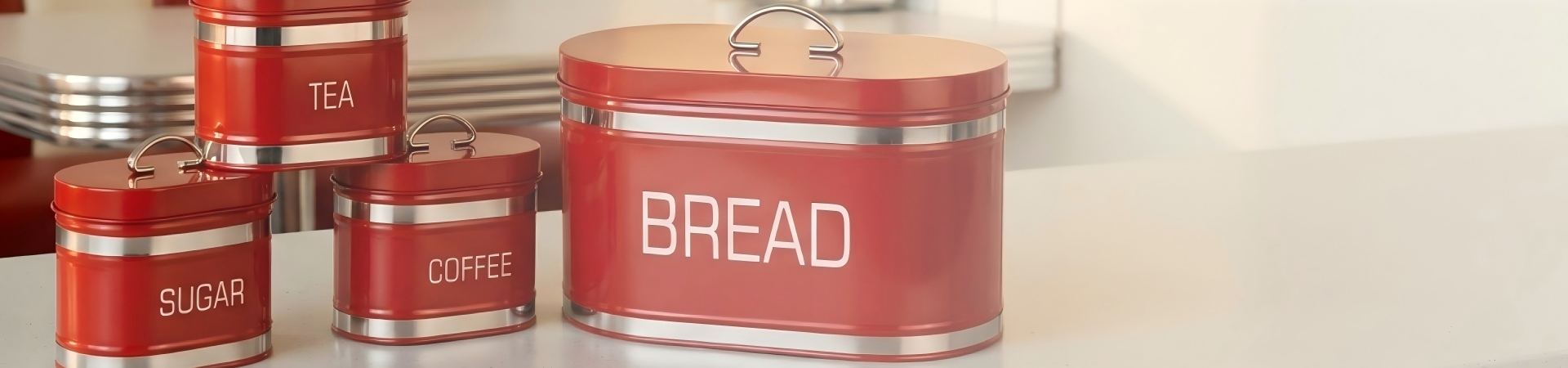
Steel kitchen accessories usually provide stronger durability and load-bearing performance, while aluminum kitchen accessories offer lighter weight and better corrosion resistance. The better material depends on product requirements and market positioning.
Steel kitchen accessories and aluminum kitchen accessories are both widely used in modern kitchens, but their material characteristics create different performance advantages.
Steel products are known for their strength, rigidity and structural stability. They are commonly used for kitchen racks, storage organizers, Utensil Holders and other products that require strong support.
Aluminum products are valued for their lightweight structure, natural corrosion resistance and easy handling. They are often used in applications where weight reduction and portability are important.
For kitchenware brands, distributors and importers, material selection affects product durability, appearance, production cost and customer experience.
Steel has excellent mechanical strength and structural stability.
Kitchen accessories often need to support daily loads, such as cookware, utensils, containers and other kitchen items. Steel structures can handle heavier weight and repeated use while maintaining their shape.
Common steel kitchen accessories include:
Kitchen Storage racks
Countertop organizers
Metal shelves
Utensil holders
Storage frames
For commercial and household applications requiring strong support, steel provides reliable performance.
From a manufacturing perspective, steel also offers flexible processing options, including cutting, bending, welding and surface coating, allowing manufacturers to create durable customized products.
Aluminum kitchen accessories have unique benefits because of their lightweight characteristics.
The main advantages include:
Lower product weight
Natural corrosion resistance
Easy transportation
Modern appearance
Good processing flexibility
Aluminum products are easier to move and install, making them suitable for applications where lightweight design is important.
However, aluminum generally has lower hardness and strength compared with steel. For products requiring high load capacity, additional structural design may be needed.
Durability depends on the specific application.
Steel kitchen accessories usually perform better in situations requiring:
Heavy loads
Frequent daily use
Strong structural support
Long-term stability
Aluminum kitchen accessories perform well in environments where:
Lightweight design matters
Corrosion resistance is important
Easy handling is required
For kitchen storage products, steel is often preferred because storage solutions frequently require stronger support and stable structures.
Aluminum naturally forms an oxide layer that helps protect the surface from corrosion.
Steel requires additional surface treatments, such as powder coating, painting or plating, to improve corrosion resistance.
High-quality coated steel products can provide excellent protection for kitchen applications, especially when manufactured with proper surface treatment processes.
For example, powder coated steel kitchen organizers can combine:
Strong structure
Attractive appearance
Color customization
Good moisture resistance
The choice depends on the product environment and expected service conditions.
For OEM and ODM projects, both steel and aluminum provide customization opportunities.
Steel kitchen accessories offer advantages in:
Structural customization
Heavy-duty product development
Large-scale manufacturing
Cost-effective production
Aluminum kitchen accessories offer advantages in:
Lightweight product design
Premium appearance
Special shape development
For global homeware brands, the right choice depends on product positioning and customer expectations.
A professional manufacturer can help select suitable materials based on:
Target market
Product function
Budget requirements
Design goals
Production volume
Material choice influences how customers perceive product quality.
Steel kitchen accessories often communicate:
Strength
Reliability
Long service life
Practical value
Aluminum kitchen accessories often communicate:
Lightweight design
Modern style
Premium simplicity
For kitchen storage brands, steel products are often preferred for practical and durable product lines, while aluminum may be selected for specialized lightweight designs.
The best material depends on the product application.
Choose steel kitchen accessories when:
High strength is required
Products need to support heavier items
Long-term durability is important
Cost efficiency matters
Choose aluminum kitchen accessories when:
Lightweight design is preferred
Corrosion resistance is a priority
Easy transportation is needed
Modern appearance is important
For most kitchen storage and organization products, steel remains a popular choice because it provides a strong balance between durability, production efficiency and customization capability.
Material performance depends not only on the raw material but also on manufacturing quality.
A reliable metal kitchen accessory manufacturer should control:
Material selection
Metal forming accuracy
Welding processes
Surface finishing
Product inspection
Packaging protection
HUAQING specializes in metal homeware manufacturing, providing OEM and ODM solutions for kitchen storage products, organizers and customized household products.
With professional production capabilities and export manufacturing experience, HUAQING supports global brands, retailers and distributors in developing reliable metal kitchen accessory collections.