
HUAQING


Email: huaqingwj@21cn.com


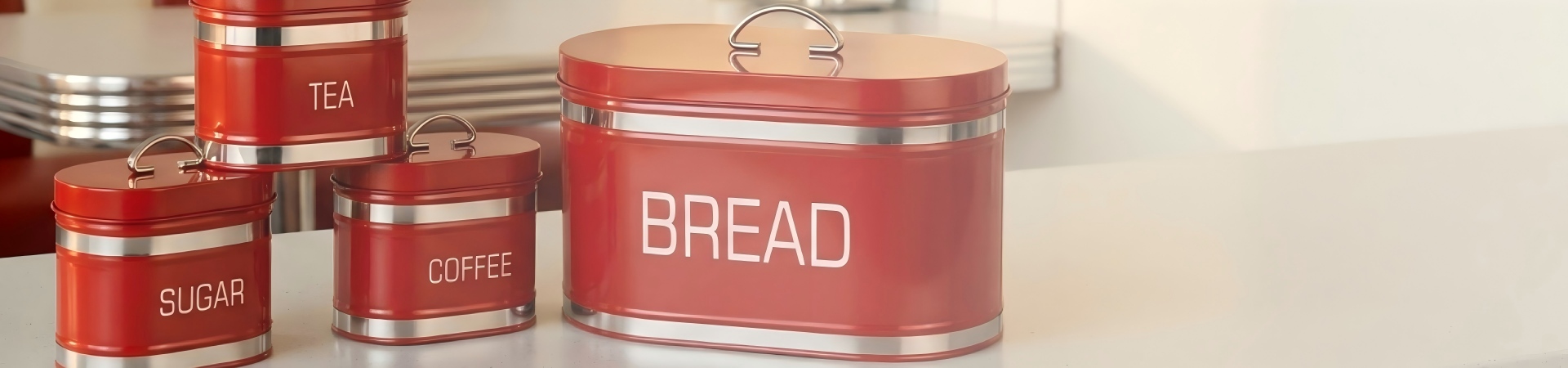
Powder coated garden products offer greater color flexibility and cost-effective surface protection, while stainless steel garden products provide natural corrosion resistance and a clean metallic appearance. The better choice depends on outdoor exposure, product design and maintenance requirements.
Powder coated garden products typically use carbon steel or other suitable metal substrates covered with a protective powder coating. Stainless steel garden products rely primarily on the corrosion-resistant properties of the stainless steel alloy, although additional surface finishing may also be applied.
These approaches offer different advantages for garden product manufacturers, importers and private-label brands.
| Comparison Factor | Powder Coated Garden Products | Stainless Steel Garden Products |
|---|---|---|
| Corrosion protection | Depends on coating quality and coverage | Comes primarily from the alloy's protective oxide layer |
| Color options | Extensive customization | Often features natural metallic finishes, but can also be colored |
| Surface appearance | Matte, glossy, textured or colored | Brushed, polished or other metallic finishes |
| Scratch performance | Coating can be damaged by deep scratches | Scratches may affect appearance but do not necessarily eliminate corrosion resistance |
| Maintenance | Damaged coating may require repair | Usually requires less concern about coating damage |
| Manufacturing cost | Often economical for coated steel products | Depends on stainless steel grade and fabrication requirements |
| Common applications | Watering Cans, plant stands, garden racks and decorative accessories | Garden containers, Watering Cans and products requiring corrosion resistance |
Powder coating is widely used because it combines surface protection with design flexibility. The process applies dry powder to a prepared metal surface and cures it to form a continuous coating.
For garden product brands, this finish offers several advantages:
Flexible colors: Products can be matched to brand guidelines, seasonal collections and retail trends.
Versatile appearance: Matte, glossy and textured finishes support different product styles.
Surface protection: A properly applied coating helps protect the underlying metal from moisture and everyday wear.
Consistent product design: Standardized coating specifications can help maintain appearance across bulk orders.
Powder coated carbon steel is often a practical choice for garden accessories that need both structural strength and an attractive finish.
However, durability depends on surface preparation, coating formulation, curing conditions, film thickness and application quality. A coating that is poorly applied or damaged during use may allow corrosion to develop beneath or around the affected area.
Stainless steel contains chromium, which forms a thin protective oxide layer on the surface. This layer helps the material resist corrosion without relying entirely on an applied paint or powder coating.
Key advantages include:
Natural corrosion resistance: Suitable stainless steel grades can withstand many outdoor conditions.
Long-term appearance: The metallic finish can retain its visual appeal with appropriate care.
Lower dependence on coatings: Surface scratches do not automatically expose ordinary carbon steel beneath a protective layer.
Easy maintenance: Routine cleaning is generally sufficient for many household garden applications.
Stainless steel is particularly useful for products exposed to frequent moisture or where long-term surface protection is a priority.
Nevertheless, stainless steel is not completely rust-proof. Its performance varies by grade and environment. Chlorides, coastal exposure, trapped moisture and contamination from ordinary carbon steel can contribute to corrosion. Selecting the right grade is therefore essential.
Stainless steel generally has an advantage when long-term corrosion resistance is the primary requirement, especially in wet environments where coatings could become scratched or damaged.
Powder coated products can also provide excellent corrosion protection when the substrate, pretreatment and coating system are properly selected.
The main difference is how protection is maintained:
Powder coated steel: Protection depends heavily on coating coverage and integrity. Cut edges, joints and damaged areas require particular attention.
Stainless steel: Corrosion resistance comes mainly from the alloy itself, although suitable grades and good fabrication practices remain important.
For garden products used outdoors throughout the year, buyers should evaluate the intended climate and maintenance conditions instead of assuming that every stainless steel product will outperform every coated steel product.
The best surface treatment depends on the product's function and market positioning.
Powder coated steel is suitable for:
Decorative metal watering cans
Plant stands and holders
Garden storage racks
Color-coordinated outdoor accessories
Products requiring custom brand colors
The coating allows manufacturers to create distinctive finishes while retaining the strength of the underlying metal.
Stainless steel is suitable for:
Products exposed to frequent moisture
Garden accessories requiring a metallic appearance
Products where reduced dependence on a coating is desirable
Premium garden product collections
For example, a decorative watering can may benefit from powder coating when color is central to the product design. A watering can intended for prolonged exposure to moisture may benefit from stainless steel, provided the grade and construction are appropriate.
For B2B buyers, value depends on the relationship between material cost, product performance, manufacturing requirements and retail positioning.
Powder coated steel can offer strong value when brands need attractive colors, structural strength and competitive production costs. Stainless steel can justify a higher initial cost when corrosion resistance, maintenance expectations and material perception are more important.
Buyers should compare:
Initial unit cost: Include material, fabrication and surface treatment.
Expected service life: Consider moisture exposure, scratches and maintenance.
Product appearance: Match the finish to the target market and brand identity.
Shipping requirements: Evaluate product weight, packaging and protection against transit damage.
Quality consistency: Confirm that the manufacturer can reproduce the approved finish across production batches.
The lowest-cost finish is not always the best value. A surface treatment that does not match the intended environment may increase returns, replacements and long-term costs.
A reliable purchasing decision starts with a clear product specification.
For powder coated products, buyers should check:
Metal substrate and thickness
Surface pretreatment process
Coating type, color and finish
Coating adhesion and coverage
Corrosion testing appropriate to the application
Protection of edges, joints and welded areas
For stainless steel products, buyers should check:
Stainless steel grade and material documentation
Fabrication and welding quality
Surface finish and cleanliness
Suitability for the expected outdoor environment
Inspection standards and packaging requirements
For both options, sample approval and mass-production inspection help confirm that the finished product matches the agreed specifications.
HUAQING specializes in metal homeware manufacturing, including metal garden products and customized household items for international markets.
For importers, distributors and private-label brands, product development discussions can cover dimensions, structural design, surface finishes, colors, branding and packaging, subject to manufacturing feasibility.
When selecting a manufacturing partner, buyers should confirm the available materials, finishing processes, quality inspection procedures and product-specific requirements before mass production.
Contact HUAQING to discuss customized metal garden products and identify a suitable material and surface finish for your target market.
Powder coating is often better for color customization and cost-effective protection. Stainless steel is generally preferable when natural corrosion resistance and reduced dependence on a coating are priorities.
Yes. If the coating is deeply scratched, poorly applied or damaged around edges and joints, the exposed underlying metal may corrode.
Not always. Suitable stainless steel grades can resist corrosion without an additional coating, although the appropriate grade depends on exposure conditions. Surface finishing can still improve appearance and cleanability.
A suitably selected stainless steel grade is often a strong option for coastal environments. Powder coated products may also work if the substrate and coating system are designed for the exposure, but damaged areas require attention.
Yes. Manufacturers can often customize colors, surface textures, dimensions, logos and packaging according to project specifications and production capabilities.