
HUAQING


Email: huaqingwj@21cn.com


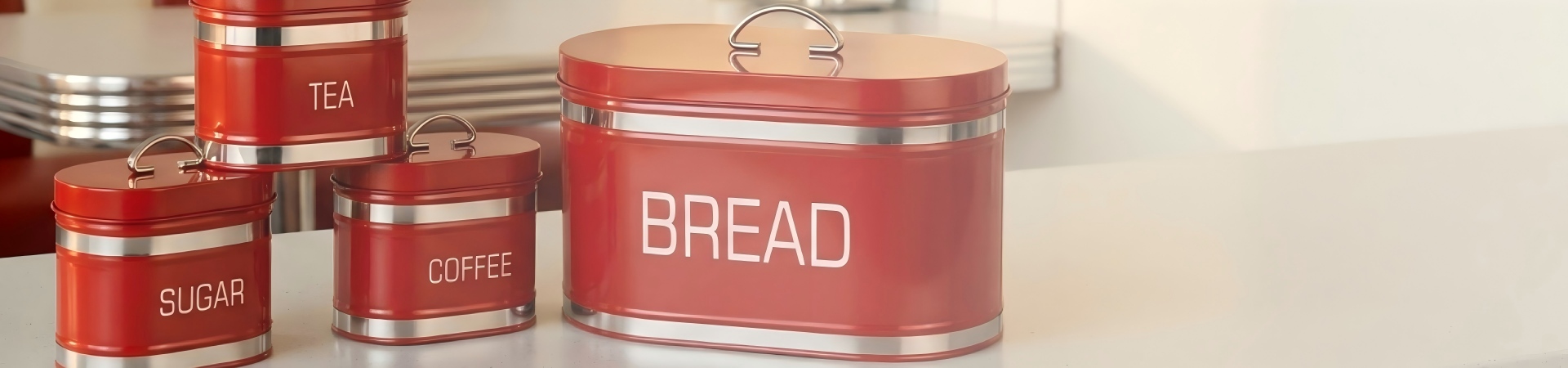
OEM kitchen products are better for custom projects requiring unique designs, specific materials or private labeling, while standard kitchen products offer faster availability and lower development costs. The right choice depends on project specifications, budget and production requirements.
OEM kitchen products are manufactured according to a buyer's specifications, which may include product dimensions, materials, colors, surface finishes, branding and packaging. Standard kitchen products follow existing designs and specifications that are already established by the manufacturer.
For importers, distributors, retailers and private-label brands, the choice affects product differentiation, development costs, delivery schedules and long-term sourcing strategies.
| Comparison Factor | OEM Kitchen Products | Standard Kitchen Products |
|---|---|---|
| Product design | Can be customized to project requirements | Uses existing designs |
| Materials and finishes | May offer project-specific options | Limited to available specifications |
| Branding | Supports customized branding where available | Depends on supplier options |
| Development cost | May involve sampling, tooling or design costs | Usually lower initial investment |
| Lead time | May require development and approval | Often faster if stock is available |
| Product differentiation | Greater potential for exclusive designs | Similar products may be available elsewhere |
| Best suited for | Custom projects and private-label brands | Standard purchasing and rapid market entry |
OEM manufacturing gives buyers greater control over the product they bring to market.
Instead of choosing only from existing designs, buyers can work with a manufacturer to adjust specifications according to their target customers, sales channels and application requirements.
Common customization options include:
Product dimensions: Adjusting size, height, width or capacity to fit specific requirements.
Material selection: Choosing suitable metal grades, thicknesses or other materials according to product function.
Surface finishes: Specifying colors, textures, coatings or metallic finishes.
Structural details: Modifying handles, lids, openings, joints or other functional components.
Branding and packaging: Adding logos, labels and retail packaging that match the brand identity.
For example, a homeware brand developing a metal Bread Box may require a specific capacity, a matching color across its kitchen collection and packaging suitable for retail shelves. OEM production allows these requirements to be discussed and incorporated into the product specification, subject to manufacturing feasibility.
Standard kitchen products are often the more practical choice when the buyer's requirements match an existing design.
Their main advantages include:
Faster purchasing: Existing designs may be available without a lengthy development process.
Lower initial investment: Buyers can often avoid new tooling and extensive sampling costs.
Simpler procurement: Established specifications make quotations and product comparisons easier.
Reduced development uncertainty: Buyers can evaluate an existing sample before placing an order.
Standard products are suitable for retailers replenishing established product lines, distributors sourcing general kitchen accessories and businesses that need to enter a market quickly.
However, availability should be confirmed. A standard design is not necessarily in stock, and production lead times may still apply to large orders.
OEM products generally offer greater opportunities for differentiation because the buyer can influence more aspects of the finished product.
This matters when a brand wants to avoid competing entirely on price. Distinctive dimensions, product combinations, surface finishes and packaging can help create a recognizable collection.
Standard products can still compete through pricing, distribution, merchandising and service. However, when several sellers offer similar products, it may be harder to establish a unique product identity.
For private-label brands, the most useful question is whether customization will solve a real customer problem or create meaningful market value. Customization for its own sake may increase costs without improving sales performance.
Standard products generally require less upfront investment, while OEM products may provide better strategic value when customization is essential.
OEM projects can involve additional costs for:
Product design and engineering
Prototype development and sampling
New molds or tooling, where required
Specialized materials or finishes
Packaging development and testing
These costs should be evaluated alongside the expected order quantity, product lifespan and commercial benefits.
For large or recurring orders, spreading development costs across more units may improve the economics of OEM production. For small projects or products with uncertain demand, an existing standard design may reduce financial risk.
A practical comparison should include the total project cost rather than unit price alone.
Both options can support bulk orders, but their advantages differ.
OEM production is useful when a buyer needs consistent customized specifications across multiple production runs. Once the product design and acceptance criteria are approved, they can serve as references for repeat orders.
Standard products are useful when the buyer prioritizes established specifications and straightforward replenishment.
For either option, bulk buyers should confirm:
Minimum order quantities
Production capacity
Material availability
Approved samples and tolerances
Quality inspection requirements
Packaging specifications
Production and shipping schedules
A customized design does not automatically guarantee stable quality. Consistency depends on documented specifications, process control and inspection throughout production.
OEM manufacturing can help private-label brands create products that match their positioning and target markets.
For metal Kitchen Storage products, customization may include bread boxes, storage canisters, Utensil Holders, kitchen organizers and other household accessories, depending on the manufacturer's product range and capabilities.
A structured development process typically involves:
Requirement definition: Confirm the target market, application, dimensions, materials and budget.
Design review: Evaluate the proposed structure, finish and production feasibility.
Sample approval: Check appearance, dimensions, function and workmanship.
Production planning: Confirm order quantity, material availability and delivery expectations.
Quality inspection: Compare finished products against the approved sample and written specifications.
This process helps reduce misunderstandings and gives buyers a clearer basis for evaluating mass-produced goods.
Standard products are often preferable when the project does not require unique specifications.
Choose standard kitchen products when:
Existing designs already meet customer needs.
Rapid market entry is a priority.
The initial budget is limited.
Demand has not yet been validated.
Custom tooling would add little practical value.
A staged strategy can also work well: launch with standard products, gather customer feedback and invest in OEM development when sales data identifies a clear opportunity.
HUAQING specializes in metal homeware manufacturing, including kitchen storage products and customized household items for international markets.
For importers, distributors, retailers and private-label brands, project discussions can cover product dimensions, structural details, surface finishes, colors, branding and packaging, subject to manufacturing feasibility.
Before proceeding, buyers should confirm the required product category, customization scope, material specifications, order quantity and quality acceptance criteria.
Contact HUAQING to discuss your kitchen product requirements and evaluate a suitable manufacturing solution for your project.
OEM products are generally better when a project requires customized specifications or distinctive branding. Standard products are often better when speed, simplicity and lower initial investment are the main priorities.
Not always. OEM projects may involve additional development or tooling costs, but the final unit price depends on specifications, order volume, materials and production processes.
Some manufacturers offer logo application or customized packaging for existing products. Available options depend on the product, production process and supplier's capabilities.
The timeline depends on design complexity, tooling requirements, sample revisions, material availability and order quantity. Buyers should confirm a project-specific schedule with the manufacturer.
Yes, provided the project's quantity, budget and customization requirements align with the manufacturer's capabilities. Standard products can be a lower-risk starting point when demand is uncertain.