
HUAQING


Email: huaqingwj@21cn.com


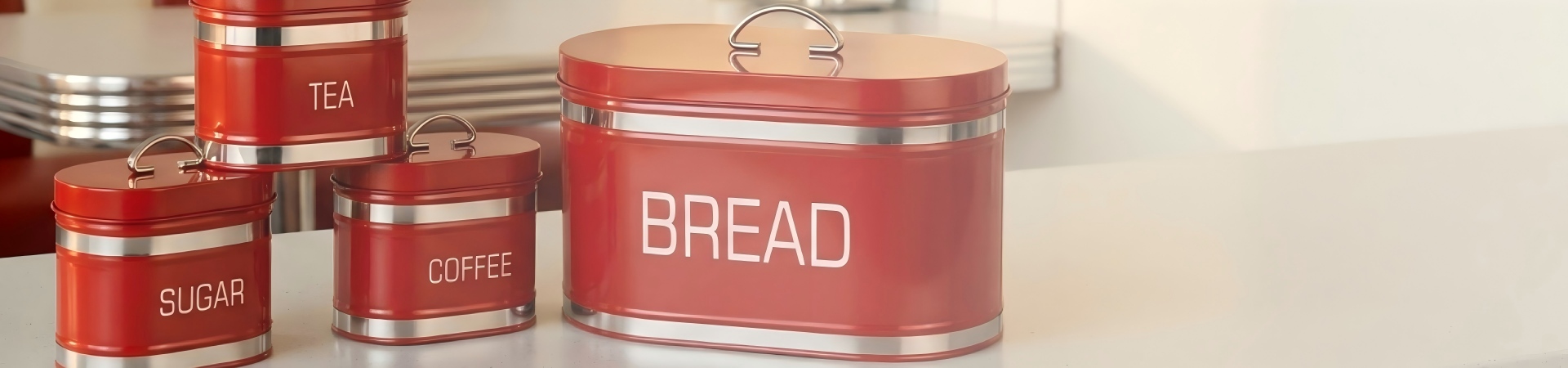
Metal Bread Boxes offer durable construction, easy-to-clean surfaces and modern design options, while wooden bread boxes provide natural warmth and a traditional appearance. For kitchen brands, the better choice depends on target customers, maintenance expectations and product positioning.
Metal bread boxes are commonly made from carbon steel or stainless steel, often with painted, powder-coated or polished finishes. Wooden bread boxes use solid wood, engineered wood or wood-based panels, with performance varying according to material quality and construction.
For kitchenware brands, importers and retailers, material selection affects product durability, appearance, manufacturing consistency and retail positioning.
| Comparison Factor | Metal Bread Box | Wooden Bread Box |
|---|---|---|
| Appearance | Modern, industrial, minimalist or vintage | Natural, rustic, traditional or farmhouse |
| Structural durability | Strong when material thickness and construction are appropriate | Depends on wood type, panel construction and joints |
| Moisture response | Can resist moisture well with suitable material and finishing | Can absorb moisture, swell or warp under unsuitable conditions |
| Cleaning | Smooth surfaces are generally easy to wipe | May require more careful cleaning, depending on the finish |
| Design flexibility | Supports stamping, forming, powder coating and color customization | Supports shaping, staining, painting and natural wood finishes |
| Production consistency | Metal forming and fixtures can support repeatable dimensions | Wood grain and material characteristics can create natural variation |
| Branding options | Logos, colors, finishes and packaging | Engraving, printing, finishes and packaging |
| Best suited for | Modern kitchen collections and coordinated metal homeware | Natural-material collections and traditional kitchen styles |
Metal bread boxes are popular with brands that want a balance of practical storage, durable construction and flexible product styling.
Their advantages include:
Durable structure: Properly designed metal bodies can resist everyday knocks and maintain their shape during normal use.
Easy surface maintenance: Smooth painted or stainless steel surfaces are generally easy to wipe clean.
Wide finish selection: Powder coating, polished surfaces and other finishing options support different brand identities.
Coordinated product collections: Metal bread boxes can be matched with storage canisters, Utensil Holders and other metal kitchen accessories.
Repeatable manufacturing: Controlled forming, assembly and finishing processes can help maintain consistency across bulk orders.
For private-label brands, a metal bread box can be developed in specific dimensions, colors and handle styles to match an existing kitchen collection.
However, metal quality depends on the selected material, thickness, construction and surface treatment. Carbon steel can corrode if its protective coating is damaged, while stainless steel performance varies by grade and environment.
Wooden bread boxes appeal to customers who prefer natural materials and traditional kitchen aesthetics.
Their main advantages include:
Natural appearance: Wood grain creates visual variation and a warm, familiar look.
Traditional styling: Wooden products fit farmhouse, rustic and classic kitchen collections.
Material variety: Different wood species and engineered wood products offer different colors, textures and price points.
Design versatility: Wood can be shaped, stained, painted or combined with other materials.
Wooden bread boxes can be attractive products for homeware brands focused on natural materials and traditional interior design.
However, wood is sensitive to moisture and environmental changes. Depending on the material and finish, it may absorb moisture, swell, warp or develop surface damage. Buyers should also assess the quality of joints, coatings and internal surfaces.
A well-made metal bread box generally offers strong resistance to everyday impacts and structural wear. Wooden bread boxes can also last for years, but their durability depends heavily on the wood, panel construction, joints and protective finish.
The main factors affecting service life include:
Material quality: Appropriate metal thickness or suitable wood construction provides a reliable foundation.
Structural design: Lid alignment, hinges, handles and joints affect long-term performance.
Surface protection: Metal coatings help reduce corrosion risk, while suitable wood finishes can limit moisture absorption.
Daily handling: Repeated opening, closing and movement can gradually wear components.
Maintenance conditions: Cleaning methods, humidity and storage environment influence product lifespan.
For kitchen brands, durability should be evaluated through sample testing and inspection rather than material claims alone.
A metal bread box with poor hinges or a damaged coating may perform worse than a carefully manufactured wooden product. Structural quality and finishing are therefore as important as the main material.
Metal bread boxes generally offer easier routine surface cleaning because smooth metal surfaces can usually be wiped with a damp cloth and dried afterward.
Wooden bread boxes may require more careful maintenance, particularly when the surface is unfinished or the coating is not designed for frequent wiping.
For both types, bread crumbs should be removed regularly, and the interior should be allowed to dry before the box is closed.
Kitchen brands should avoid making unsupported claims that either material automatically keeps bread fresh for longer. Bread freshness depends on factors such as the recipe, humidity, temperature, airflow and storage duration. A bread box provides storage, but its design does not replace appropriate food-handling practices.
Both materials support customization, but their manufacturing methods create different design opportunities.
Metal bread boxes can support:
Custom powder-coated colors
Matte, glossy or textured finishes
Stamped or formed body shapes
Different lid and handle structures
Printed logos and branded packaging
These options are useful for brands that want consistent colors across multiple Kitchen Storage products.
Wooden bread boxes can support:
Different wood species or wood-based materials
Natural, stained or painted finishes
Engraved logos
Traditional shapes and decorative details
Mixed-material designs
Wood is especially attractive when natural grain and handcrafted appearance are important to the brand.
The best option depends on whether the brand prioritizes a consistent industrial finish, natural material variation or a combination of both.
Metal bread boxes are often a strong choice for private-label programs that require repeatable dimensions, coordinated colors and consistent finishes across large product collections.
OEM customization may cover:
Product dimensions and capacity
Body thickness and structural details
Lid design and opening mechanism
Surface finish and color
Logo placement
Retail packaging and export cartons
Wooden bread boxes can also support OEM development, particularly for brands targeting natural-material or traditional kitchen collections.
Before selecting either material, buyers should confirm the target retail price, order quantity, manufacturing capabilities and expected appearance standards. A sample approval process helps establish a reference for mass production.
Commercial value depends on more than the initial purchase price. Brands should consider manufacturing costs, packaging, shipping, product differentiation and expected customer demand.
Metal bread boxes may offer advantages when brands need a coordinated kitchen storage range, customizable finishes and consistent product appearance.
Wooden bread boxes may be more suitable when the product concept depends on natural textures and traditional styling.
For importers and distributors, the comparison should include:
Unit price at different order quantities
Material and surface finishing costs
Packaging and transportation expenses
Product dimensions and shipping efficiency
Quality inspection and replacement costs
Retail positioning and customer preferences
A lower unit price does not always mean better value. The most suitable product is the one that meets customer expectations while maintaining an acceptable total cost and margin.
Before placing a bulk order, kitchen brands and importers should confirm the product specifications and manufacturing standards.
Important checkpoints include:
Material specification: Confirm the metal type and thickness.
Dimensional accuracy: Check body dimensions, lid fit and usable storage space.
Structural quality: Inspect hinges, handles, edges and assembly points.
Surface finish: Check color consistency, coating coverage and visible defects.
Functional testing: Open and close the lid repeatedly and assess normal handling.
Packaging protection: Ensure products are protected against scratches, dents and transit damage.
Production consistency: Compare mass-produced units with the approved sample.
These checks help reduce quality disputes and ensure that the delivered products match the brand's expectations.
HUAQING specializes in metal homeware manufacturing, including metal kitchen storage products and customized household items for international markets.
For importers, wholesalers, retailers and private-label brands, project discussions can cover bread box dimensions, structural details, surface finishes, colors, branding and packaging, subject to manufacturing capabilities and project requirements.
When evaluating a manufacturing partner, buyers should confirm available product designs, customization options, material specifications, quality inspection procedures and production schedules before mass production.
Contact HUAQING to discuss customized metal bread boxes and develop a kitchen storage product range for your target market.
Metal bread boxes are generally easier to clean and offer flexible finishes, while wooden bread boxes provide natural textures and traditional styling. The better choice depends on product requirements and customer preferences.
Not necessarily. Bread freshness depends on the recipe, humidity, temperature, airflow and storage conditions. The material alone does not determine how long bread stays fresh.
Carbon steel bread boxes can rust if their protective coating is damaged or unsuitable for the environment. Appropriate materials, finishing and maintenance help reduce corrosion risk.
They may require more careful maintenance because wood can absorb moisture and respond to environmental changes. The required care depends on the wood, finish and construction.
Yes. Depending on manufacturing capabilities, customization may include dimensions, colors, surface finishes, lid structures, logos and retail packaging.