
HUAQING


Email: huaqingwj@21cn.com


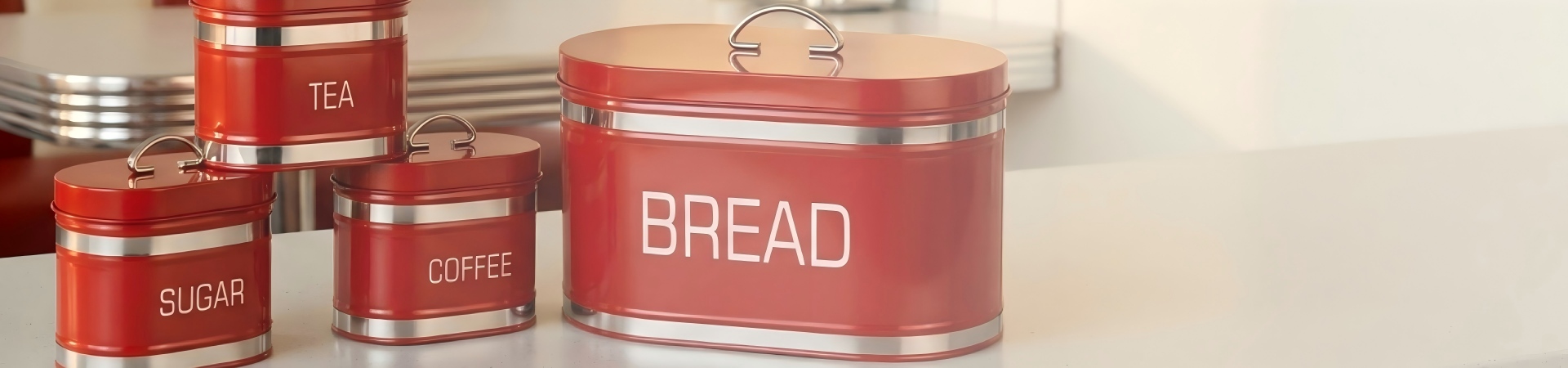
Powder-coated Bread Boxes generally offer better resistance to chipping and everyday wear when properly applied and cured, while painted bread boxes can provide flexible colors and finishes. Actual durability depends on coating quality, surface preparation, application and usage conditions.
Powder coating applies dry coating powder to a prepared metal surface, typically using electrostatic attraction followed by heat curing. A conventional painted bread box generally uses liquid paint that forms a protective film as its solvents or water evaporate and the coating cures.
Both finishes can protect metal bread boxes and create different visual effects, but their performance depends on the coating system and manufacturing process.
| Comparison Factor | Powder Coated Bread Box | Painted Bread Box |
|---|---|---|
| Application method | Dry powder applied and heat-cured | Liquid paint applied by spraying or another suitable method |
| Wear resistance | Often strong when properly applied and cured | Varies significantly with paint formulation and curing |
| Chipping resistance | Generally good with suitable pretreatment and coating thickness | Depends on paint quality, adhesion and film properties |
| Corrosion protection | Effective when the coating system is properly specified | Effective when the paint system provides adequate coverage and protection |
| Color options | Broad range of colors and textures | Broad range of colors and decorative effects |
| Surface appearance | Can provide matte, glossy, textured or smooth finishes | Can provide smooth, glossy, matte and specialized finishes |
| Repairability | Local repairs may be difficult to blend seamlessly | Some liquid paint finishes may be easier to touch up |
| Manufacturing considerations | Requires suitable application equipment and curing conditions | Requires appropriate application, drying and curing controls |
| Best suited for | Products requiring durable, consistent decorative finishes | Products requiring particular decorative effects or suitable paint-based finishing systems |
The key distinction is not simply powder versus liquid. Buyers should evaluate the complete coating system, including metal preparation, coating formulation, film thickness, curing conditions and final inspection.
Powder coating can provide a durable, continuous finish that withstands everyday handling when the metal surface is properly prepared and the coating is correctly applied and cured.
Its main advantages include:
Resistance to everyday wear: A suitable powder coating can withstand repeated handling and routine cleaning.
Good adhesion: Proper pretreatment and curing help the coating bond to the metal substrate.
Consistent surface appearance: Controlled application can help maintain color and finish consistency across production batches.
Flexible design options: Matte, glossy and textured finishes support different kitchenware collections.
Corrosion protection: An intact coating helps prevent moisture from reaching the underlying carbon steel.
For kitchenware manufacturers, powder coating can be a practical option for producing metal bread boxes in coordinated colors and finishes for wholesale and private-label programs.
However, powder coating is not automatically more durable than every liquid paint. Poor surface preparation, inadequate curing, unsuitable coating selection or excessive coating thickness can lead to adhesion problems, cracking or chipping.
Yes. A well-formulated and correctly applied liquid paint system can provide good durability and corrosion protection for a metal bread box.
Paint performance varies according to resin chemistry, film thickness, surface preparation, application conditions and curing requirements.
Potential advantages include:
Decorative flexibility: Liquid coatings can create a wide range of colors and specialized visual effects.
Suitable application for complex designs: Certain liquid coating systems can be practical for products with intricate shapes.
Repair options: Some paint systems are easier to touch up when minor surface damage occurs.
Flexible production methods: Paint application can suit different manufacturing setups and product requirements.
The main limitation is variability between paint systems. A basic decorative paint may not perform as well as a high-quality industrial coating, while a properly engineered liquid coating may perform very well under demanding conditions.
For B2B buyers, the specific paint system and its verified performance matter more than the general label “painted.”
Powder coating often provides good resistance to scratches and chipping, but neither finish is immune to damage.
Actual performance depends on coating hardness, flexibility, adhesion, thickness, substrate preparation and the severity of the impact.
For metal bread boxes, common sources of surface damage include:
Contact with other products during transportation
Repeated handling in retail environments
Abrasive cleaning materials
Impacts against countertops or hard surfaces
Friction between products during storage and packing
A powder-coated product with poor adhesion can chip, while a high-quality liquid-painted product may perform better than an inadequately applied powder coating.
Manufacturers should assess the finish using appropriate tests, such as adhesion testing, abrasion evaluation and impact resistance testing, where relevant to the product specification.
For importers, checking only the appearance of a sample is insufficient. Coating performance should also be evaluated against agreed acceptance criteria.
Both powder coating and liquid paint can protect carbon steel bread boxes against corrosion by forming a barrier between the metal and its environment.
Powder coating often performs well when the metal is properly pretreated and the coating covers the required surfaces. Liquid paint can also provide effective protection when its formulation and application are suitable.
Rust protection depends on several factors:
Surface preparation: Oil, dirt, oxidation and other contaminants can weaken coating adhesion.
Coating coverage: Thin spots, uncovered edges and defects can expose the substrate.
Film thickness: The coating must meet the specified thickness range.
Curing or drying: Incorrect processing can reduce coating performance.
Damage during handling: Scratches and chips may expose carbon steel to moisture.
Storage conditions: Prolonged moisture exposure can increase corrosion risk.
Stainless steel bread boxes require a different assessment because their corrosion resistance comes partly from the material itself. Additional decorative coatings may still affect appearance and surface durability, but coating performance should not be confused with the underlying steel's corrosion resistance.
Powder coating can be a strong option for wholesale and private-label bread boxes when durability, repeatable colors and coordinated product collections are priorities.
Liquid paint may be preferable when a specific decorative effect, application method or repair requirement makes it more suitable.
The choice should be based on the intended market and product requirements.
| Buyer Requirement | Potentially Suitable Finish | Key Consideration |
|---|---|---|
| Consistent colors across large batches | Powder coating | Color matching and process control |
| Matte or textured metal surfaces | Either | Verify the specified finish and sample |
| Frequent everyday handling | High-quality powder coating or suitable industrial paint | Test abrasion and impact resistance |
| Specialized decorative effects | Depends on the coating system | Confirm appearance and durability together |
| Easy localized touch-up | Some liquid paint systems | Check repair visibility and compatibility |
| Corrosion protection for carbon steel | Either | Verify pretreatment, coverage and coating performance |
For private-label projects, buyers should approve a production-representative sample and document the color reference, gloss level, coating requirements and acceptable defect limits.
A durable finish begins before the coating is applied. Surface preparation and process control are essential for both powder coating and liquid paint.
A practical manufacturing quality process includes:
Remove oil, dirt and other contaminants. Use an appropriate cleaning and pretreatment process for the substrate and selected coating.
Maintain suitable application parameters to achieve consistent coverage and the specified film thickness.
Follow the coating supplier's recommended processing conditions. Powder coatings generally require heat curing, while liquid paints may require drying, chemical curing or both, depending on the formulation.
Check for uneven color, visible defects, exposed metal, bubbles, runs or other finish irregularities.
Where required, evaluate adhesion, impact resistance, abrasion resistance and corrosion performance using suitable methods.
Use appropriate packaging to minimize scratches and coating damage during storage and international transportation.
These steps help manufacturers maintain consistency across bulk orders and reduce the risk of finish-related complaints.
Importers should evaluate coating specifications alongside the product's structure, price and intended retail market.
Important checks include:
Confirm the base metal and material thickness.
Specify the required color, gloss level and texture.
Request samples made using the intended production process.
Confirm coating thickness and relevant quality requirements.
Review suitable adhesion and durability test results where available.
Inspect edges, corners, hinges and other areas prone to coating damage.
Verify packaging protection and final inspection procedures.
A clear specification makes it easier to compare suppliers and reduces disagreements over what constitutes acceptable finish quality.
Buyers should also distinguish between decorative appearance and verified performance. A smooth, attractive surface does not necessarily indicate strong adhesion or long-term corrosion resistance.
HUAQING specializes in metal homeware manufacturing, including metal Kitchen Storage products and customized household items for international markets.
For importers, wholesalers, retailers and private-label brands, project discussions can cover bread box dimensions, metal specifications, surface finishes, colors, branding and packaging, subject to manufacturing capabilities and project requirements.
Before placing a bulk order, buyers should confirm available coating options, sample approval procedures, finish inspection criteria and production schedules.
Contact HUAQING to discuss your metal bread box requirements and select a surface finish suited to your product positioning and target market.
Powder coating often provides strong resistance to everyday wear when properly applied and cured. However, a high-quality liquid paint system can also be durable. Actual performance depends on the coating formulation and manufacturing quality.
Yes. If the coating is damaged or fails to protect the metal adequately, moisture can reach the underlying carbon steel and cause rust.
It can be, but scratch resistance varies by formulation, coating thickness, curing and substrate preparation. Appropriate testing is needed to compare specific products.
Powder coating is often suitable for durable, color-coordinated metal kitchenware. Liquid paint may be preferable for certain decorative effects or repair requirements. The best choice depends on product specifications and market expectations.
Depending on the requirements, relevant tests may include coating adhesion, film thickness, impact resistance, abrasion resistance and corrosion testing. Buyers should agree on applicable methods and acceptance criteria with the manufacturer.