
HUAQING


Email: huaqingwj@21cn.com


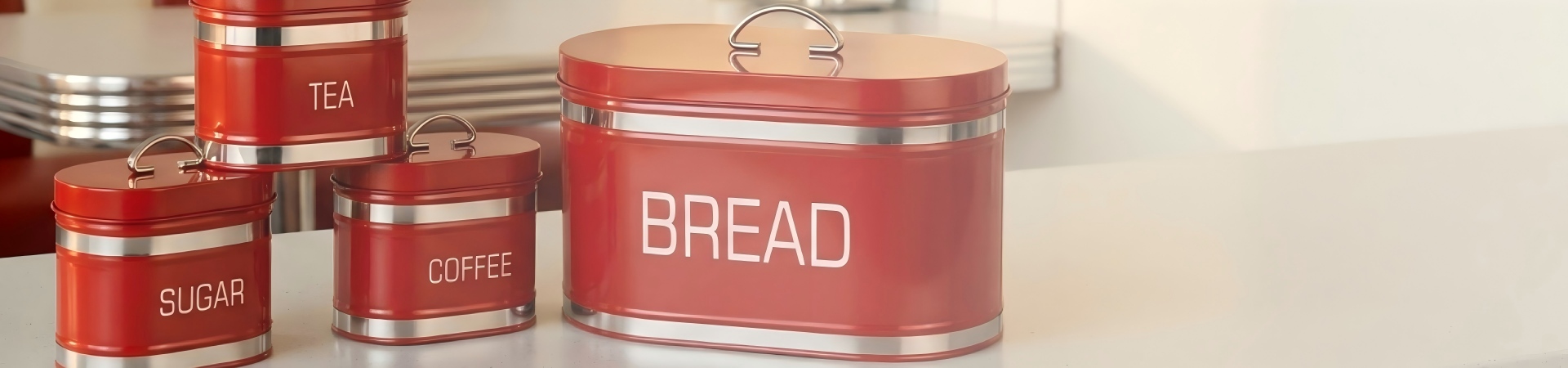
Vintage Bread Boxes appeal to consumers who prefer nostalgic details and traditional kitchen decor, while modern bread boxes suit buyers who value minimalist styling and contemporary functionality. For kitchenware brands, the better choice depends on target demographics, retail positioning and local design preferences.
Vintage bread boxes feature traditional shapes, retro colors, decorative lettering or classic metal finishes. Modern bread boxes typically emphasize clean lines, simple forms, neutral colors and practical space utilization.
For kitchenware importers, wholesalers, retailers and private-label brands, style selection affects product differentiation, pricing strategy, collection planning and customer appeal.
| Comparison Factor | Vintage Bread Box | Modern Bread Box |
|---|---|---|
| Design characteristics | Retro shapes, decorative details and nostalgic colors | Clean lines, minimalist forms and restrained details |
| Visual appeal | Warm, traditional and character-driven | Contemporary, simple and versatile |
| Target consumers | Vintage enthusiasts and traditional-home decor buyers | Modern-home consumers and minimalist design enthusiasts |
| Color preferences | Cream, muted green, pastel shades and classic contrasts | White, black, gray, neutral tones and contemporary colors |
| Branding opportunities | Retro lettering, decorative graphics and classic logos | Minimalist logos, understated graphics and coordinated finishes |
| Kitchen compatibility | Farmhouse, country, retro and traditional interiors | Contemporary, Scandinavian and minimalist interiors |
| Retail positioning | Decorative homeware and lifestyle collections | Everyday functional products and contemporary collections |
| Best suited for | Brands emphasizing character and nostalgic design | Brands emphasizing versatility and modern aesthetics |
Neither style is universally more popular. Consumer preferences vary by country, age group, home decor trends, retail price and purchasing purpose.
Vintage bread boxes appeal to consumers who want kitchen accessories to contribute to the character of their living spaces rather than serve only a practical function.
Their main advantages include:
Distinctive visual identity: Retro shapes and decorative details can help products stand out from minimalist alternatives.
Nostalgic appeal: Classic colors and traditional styling can evoke familiar kitchen environments.
Decorative value: Vintage designs can complement farmhouse, country-style and traditional interiors.
Gift potential: Distinctive appearances may suit housewarming gifts and lifestyle-oriented retail collections.
Collection consistency: Coordinated retro bread boxes, storage canisters and Utensil Holders can create a recognizable product range.
For example, a homeware brand targeting farmhouse-style kitchens may select a cream-colored metal bread box with rounded edges and vintage-inspired lettering.
However, vintage styling does not automatically mean higher quality or stronger sales. Brands should ensure that decorative elements remain consistent with practical requirements, including lid operation, cleaning and storage capacity.
Modern bread boxes appeal to consumers who prefer practical storage products with simple, adaptable designs.
Their advantages include:
Versatile appearance: Neutral colors and clean lines can complement a wide range of kitchen interiors.
Minimalist styling: Reduced decorative details help create an uncluttered visual appearance.
Contemporary product coordination: Modern bread boxes can match kitchen canisters, utensil holders and other metal storage accessories.
Functional design opportunities: Product development can prioritize compact dimensions, convenient openings and accessible storage.
Broad retail positioning: Simple designs can suit everyday homeware ranges as well as premium contemporary collections.
For example, a private-label brand serving urban households may choose a matte black or white metal bread box with a simple handle and unobtrusive branding.
Modern styling can also make it easier to maintain a consistent appearance across multiple product sizes and storage categories.
Nevertheless, a minimalist appearance alone does not guarantee better functionality. Product dimensions, lid construction, surface quality and ease of cleaning remain important purchasing considerations.
Vintage and modern bread boxes serve overlapping but distinct consumer preferences. The most suitable design depends on the customer's lifestyle, home decor and expectations for kitchen accessories.
| Consumer Group | Potentially Suitable Style | Main Purchasing Considerations |
|---|---|---|
| Vintage and retro enthusiasts | Vintage | Nostalgic details, classic colors and distinctive appearance |
| Farmhouse-style homeowners | Vintage | Warm tones, traditional shapes and decorative coordination |
| Minimalist consumers | Modern | Simple forms, neutral colors and uncluttered design |
| Urban apartment residents | Modern | Compact dimensions, practical access and versatile styling |
| Contemporary homeware shoppers | Modern | Clean finishes and coordination with other kitchen products |
| Gift and lifestyle retailers | Either | Distinctive appearance, packaging and perceived value |
| Private-label kitchenware brands | Either | Target audience, collection identity and differentiation |
These are useful starting points rather than fixed demographic rules. Age alone does not determine whether a consumer prefers vintage or modern styling.
For B2B buyers, sales history, customer reviews, competitor assortments and market testing provide stronger evidence than assumptions about consumer demographics.
Neither vintage nor modern bread boxes have a universal advantage across international markets. The stronger option depends on local interior design preferences, purchasing habits and retail positioning.
Vintage styles may suit retailers specializing in farmhouse decor, nostalgic homeware or decorative kitchen accessories. Modern styles may fit retailers focused on contemporary interiors, minimalist products or coordinated Kitchen Storage collections.
Before choosing a design for export, importers should consider:
Local design preferences: Assess popular colors, finishes and interior styles in the destination market.
Retail channel: Home decor boutiques may prioritize visual character, while general homeware retailers may emphasize versatility and functionality.
Target price: Decorative details, surface finishes and packaging can influence manufacturing costs and retail positioning.
Product assortment: Determine whether the bread box complements the retailer's existing storage collection.
Customer feedback: Review comparable product performance and test new styles before placing large orders.
A market-specific approach helps brands avoid assuming that one design trend will perform equally well across all regions.
Styling can influence manufacturing costs, but the difference depends on the specific design rather than whether it is classified as vintage or modern.
Vintage bread boxes may require decorative lettering, special colors, additional trim or particular shaping. Modern models may use simpler forms, but premium finishes, complex lids or precise structural details can also increase costs.
| Manufacturing Factor | Vintage Bread Box | Modern Bread Box |
|---|---|---|
| Body structure | May include rounded shapes or decorative contours | May emphasize clean lines and precise geometry |
| Surface finishing | May require specialty colors or aged-look effects | May require consistent matte, glossy or metallic finishes |
| Decoration | May include lettering, patterns or additional trim | Often uses restrained branding or minimal graphics |
| Assembly | Depends on the design and number of components | Depends on the opening mechanism and structural details |
| Quality control | Includes decorative consistency and finish inspection | Includes dimensional accuracy and finish uniformity |
For importers, the best cost comparison uses equivalent product dimensions, material thickness, opening mechanisms, finishes, packaging and order quantities.
A simpler-looking product is not necessarily cheaper to manufacture. Production feasibility and material specifications should be confirmed before making cost assumptions.
Both vintage and modern bread boxes can support OEM and private-label development. The right choice depends on the brand's identity and the customers it wants to reach.
Vintage customization may focus on retro colors, decorative graphics, rounded shapes and classic branding. Modern customization may focus on neutral colors, minimalist logos, streamlined structures and coordinated product finishes.
Depending on manufacturing capabilities, customization options may include:
Product dimensions and storage capacity
Body shape and lid structure
Metal type and thickness
Powder-coated colors and surface finishes
Handles, hinges and decorative details
Logo placement and retail packaging
For private-label brands, design decisions should be documented in an approved sample and written specification. Color references, dimensions, functional requirements and acceptable finish standards help maintain consistency across production batches.
A distinctive appearance is most valuable when it reinforces the brand's positioning while meeting customers' everyday storage needs.
Retailers do not necessarily need to choose between vintage and modern designs exclusively. Offering both can help serve different customer preferences and create a more balanced kitchenware assortment.
A practical selection process includes:
Define the target customer: Identify the lifestyle, interior style and price range the product should serve.
Review competitor products: Compare designs, finishes, dimensions and retail positioning.
Assess functional requirements: Confirm storage capacity, opening mechanism and countertop footprint.
Evaluate manufacturing costs: Compare samples and quotations using consistent specifications.
Test customer response: Use limited launches, customer feedback or sales data to evaluate demand.
Adjust order quantities: Increase purchasing commitments for designs that demonstrate stronger commercial performance.
This approach helps retailers make product decisions based on evidence rather than relying entirely on design trends.
HUAQING specializes in metal homeware manufacturing, including metal kitchen storage products and customized household items for international markets.
For importers, wholesalers, retailers and private-label brands, project discussions can cover bread box dimensions, structural details, surface finishes, colors, decorative elements, branding and packaging, subject to manufacturing capabilities and project requirements.
Before placing a bulk order, buyers should confirm available designs, customization options, material specifications, minimum order requirements and quality inspection procedures.
Contact HUAQING to discuss your metal bread box requirements and develop a kitchen storage collection that matches your target customers and brand identity.
Popularity depends on the target market and retail segment. Vintage designs may appeal to customers who prefer nostalgic decor, while modern designs can suit minimalist and contemporary kitchens. Market-specific sales data is needed to determine which style performs better.
Modern bread boxes are generally a better fit because they emphasize clean lines, simple forms and restrained colors. The final choice should still match the kitchen's materials, finishes and available space.
Yes. Carefully selected materials, consistent finishes and distinctive retro styling can support premium positioning. However, perceived value also depends on construction quality, functionality and overall presentation.
Not necessarily. Cost depends on material, structure, finish, decorative features and production volume. A minimalist design can still require precise manufacturing or specialized finishes.
Yes, depending on manufacturing capabilities. Customization may include dimensions, colors, finishes, handles, decorative elements, logos and packaging.