
HUAQING


Email: huaqingwj@21cn.com


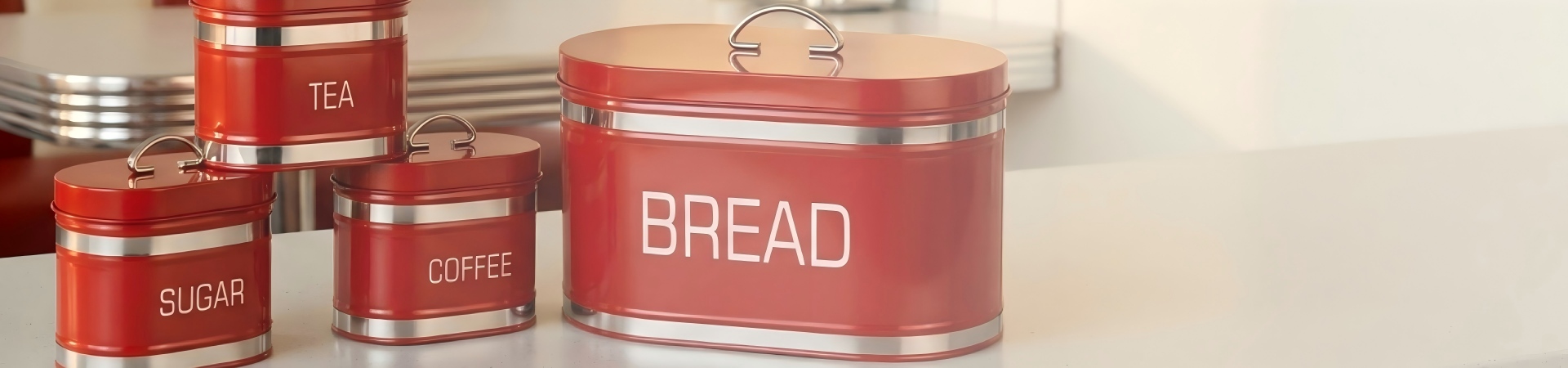
Countertop storage boxes generally offer wider applications because they can organize various household items, while kitchen Bread Boxes are specifically designed for bakery storage. For kitchenware brands, the better choice depends on target customers, product functionality and retail positioning.
A kitchen bread box is designed primarily to store bread and other bakery items on a countertop. A countertop storage box is a broader category of containers used to organize household essentials, kitchen accessories and other suitable items, depending on the product's materials and construction.
For importers, wholesalers, retailers and private-label brands, the main difference lies in product specialization. Bread boxes address a specific Kitchen Storage need, while countertop storage boxes can serve multiple applications.
| Comparison Factor | Kitchen Bread Box | Countertop Storage Box |
|---|---|---|
| Primary purpose | Bread and bakery storage | General organization and storage |
| Typical contents | Bread, rolls and selected bakery items | Kitchen accessories, small household items and other suitable products |
| Product design | Often includes a lid or door for enclosed storage | May use an open, lidded, divided or compartmentalized structure |
| Application range | Primarily kitchen and dining areas | Kitchen, bathroom, bedroom, office and other suitable spaces |
| Design priorities | Convenient access, suitable capacity and easy cleaning | Flexible organization, accessibility and space utilization |
| Retail positioning | Specialized kitchenware | General home organization and storage |
| Product differentiation | bread storage features and distinctive styling | Multiple sizes, compartments, materials and organizational functions |
| Best suited for | Kitchenware brands and bakery-storage collections | Home organization brands and broader household product ranges |
The categories can overlap. A countertop storage box may be suitable for kitchen storage, but it should not automatically be marketed for direct food contact unless its materials and construction are appropriate for that use.
Kitchen bread boxes serve a clear purpose: keeping bread and selected bakery items organized in one accessible location.
Their main advantages include:
Specialized storage: Internal dimensions can accommodate common bread shapes and bakery products.
Enclosed design: A lid or door helps keep stored items covered and reduces exposure to dust.
Coordinated kitchen styling: Metal bread boxes can complement canisters, Utensil Holders and other kitchen accessories.
Clear retail positioning: Customers can immediately understand the product's intended use.
Product-specific customization: Brands can adjust dimensions, opening mechanisms, colors and finishes to suit their target market.
For example, a private-label kitchenware brand may develop a metal bread box with a matching set of storage canisters to create a coordinated countertop collection.
However, a bread box has a narrower primary application than a general storage box. Its size and internal layout may not be ideal for organizing unrelated household items.
It is also important to distinguish storage from preservation. A bread box does not guarantee that bread will remain fresh for a specific period; freshness depends on bread type, temperature, humidity, airflow and storage duration.
Countertop storage boxes can serve a wider range of organizational purposes because their designs are not limited to bakery storage.
Depending on their size, structure and materials, they may be used for:
Kitchen organization: Storing utensils, accessories, packets and selected household supplies.
Bathroom organization: Holding suitable toiletries and personal-care accessories.
Bedroom storage: Organizing small accessories and everyday essentials.
Office organization: Keeping stationery and small office supplies together.
General home organization: Grouping frequently used items to reduce countertop or shelf clutter.
For homeware brands, this versatility creates opportunities to sell similar product concepts across multiple room categories.
A metal storage box with a neutral finish, for example, may appeal to customers who want coordinated organization products for a kitchen, office or dressing area.
Nevertheless, wider applications depend on the actual design. A box with ventilation openings, a food-specific interior or a specialized lid may be less suitable for certain uses. Product materials, dimensions, moisture exposure and cleaning requirements should all be considered.
Countertop storage boxes generally have wider potential applications because they can serve different rooms and organizational needs. Kitchen bread boxes have a more focused purpose, which can make their value proposition easier to communicate to kitchenware buyers.
| Application | Kitchen Bread Box | Countertop Storage Box |
|---|---|---|
| Bread and bakery storage | Primary application | Suitable only if the design and materials support food storage |
| Kitchen accessory organization | Limited by internal design | Often suitable |
| Bathroom organization | Generally less suitable | Suitable for compatible products and environments |
| Office supplies | Not a typical application | Often suitable |
| Bedroom accessories | Not a typical application | Often suitable |
| Coordinated kitchenware collection | Strong fit | Strong fit |
| General home organization range | Limited | Potentially broad |
For B2B buyers, application breadth should not be the only selection criterion. A specialized product may perform better commercially when customers have a clear need for it, while a versatile product may appeal to more categories but face broader competition.
The better commercial opportunity depends on customer demand, product differentiation and the brand's distribution channels.
The choice depends on the type of retail assortment a business wants to develop.
Bread boxes are suitable for retailers specializing in kitchenware, baking accessories and coordinated countertop storage.
Their focused purpose can make product descriptions, merchandising and category placement straightforward. They can also support collections differentiated by size, lid mechanism, material and finish.
Countertop storage boxes are suitable for retailers that sell broader home organization products.
Their application flexibility may allow the same general product concept to serve different customer segments, provided the dimensions, materials and construction suit each use.
For wholesalers and importers, the practical question is whether the product fills a specific gap in the assortment or provides a clear opportunity to expand into another category.
A balanced product range can include both specialized bread boxes and general-purpose storage boxes, allowing a brand to serve focused kitchen needs alongside broader home organization demand.
Material selection and product construction determine whether a storage box is appropriate for a particular environment.
Metal bread boxes are commonly made from stainless steel or coated carbon steel. Countertop storage boxes may also use these materials, but the most suitable specification depends on the intended contents and operating conditions.
Important considerations include:
Corrosion resistance: Stainless steel grades and protective coatings perform differently under moisture exposure.
Surface finish: Smooth, appropriately finished surfaces can simplify routine cleaning.
Structural strength: Material thickness and construction affect resistance to deformation.
Dimensions and capacity: The internal layout should suit the items being stored.
Opening mechanism: Hinges, sliding lids and removable covers influence accessibility.
Food-contact suitability: Products intended for direct food contact should meet applicable requirements for their intended market.
For manufacturers, defining the intended application before selecting materials helps avoid designs that look attractive but do not perform well in actual use.
Both kitchen bread boxes and countertop storage boxes can support OEM and private-label development, but they serve different product strategies.
Bread box customization focuses on bakery storage, kitchen aesthetics and practical access. General countertop storage customization focuses on dimensions, compartment layouts and application flexibility.
Depending on manufacturing capabilities, customization may include:
Product dimensions and internal capacity
Metal type and thickness
Lid, door or compartment structure
Powder-coated colors and surface finishes
Handle styles and decorative details
Logo placement and retail packaging
For a kitchenware brand, a customized bread box can strengthen a specialized product collection. For a home organization brand, a versatile storage box may provide a foundation for multiple product variations.
Before mass production, buyers should approve samples and document specifications, finish requirements, intended applications and quality acceptance criteria.
Importers should start with the customer need rather than assuming that a wider application range automatically means stronger sales.
A practical selection process includes:
Define the target market: Identify whether the business serves kitchenware buyers or broader home organization customers.
Evaluate product demand: Review competitor assortments, sales data and customer feedback.
Assess product functionality: Confirm that dimensions, materials and opening mechanisms fit the intended application.
Compare landed costs: Include product price, packaging, freight, duties and inventory expenses.
Review customization potential: Determine whether product modifications create meaningful differentiation.
Plan the assortment: Decide whether specialized and general-purpose storage products should complement one another.
For new product launches, smaller-scale market testing can help identify which products deserve larger purchasing commitments.
HUAQING specializes in metal homeware manufacturing, including metal kitchen storage products and customized household items for international markets.
For importers, wholesalers, retailers and private-label brands, project discussions can cover product dimensions, structural details, surface finishes, colors, branding and packaging, subject to manufacturing capabilities and project requirements.
Buyers should confirm the available product categories, customization options, material specifications, minimum order requirements and quality inspection procedures before placing a bulk order.
Contact HUAQING to discuss your metal homeware requirements and develop a product assortment suited to your target market.
Generally, yes. Countertop storage boxes can serve multiple organizational purposes, while bread boxes are primarily intended for bakery storage. Actual versatility depends on the product's dimensions, materials and construction.
Some can, provided their materials, interior surfaces, construction and intended use are appropriate for food storage. Buyers should confirm suitability rather than assume every storage box is food-safe.
Bread boxes are suitable for brands focusing on specialized kitchen storage. Countertop storage boxes may suit brands seeking a wider home organization assortment. Both can complement a coordinated kitchenware collection.
Some metal storage boxes are suitable for bathroom organization, but corrosion resistance depends on the metal grade, surface treatment and moisture exposure. Buyers should select products designed for the intended environment.
Yes, depending on manufacturing capabilities. Customization may include dimensions, materials, finishes, opening mechanisms, branding and packaging.