
HUAQING


Email: huaqingwj@21cn.com


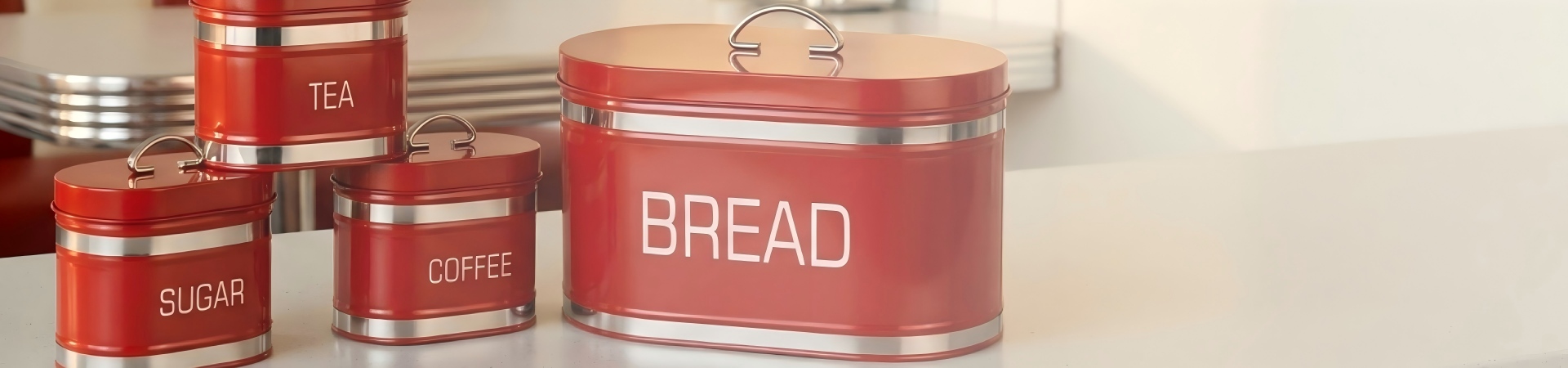
Metal spice canisters often offer higher perceived retail value through premium finishes, durability and coordinated kitchen styling, while plastic spice containers compete on affordability, lightweight handling and visibility. The better option depends on target customers, product positioning and retail margins.
Metal spice canisters are commonly made from stainless steel or coated carbon steel, while plastic spice containers use materials such as polypropylene (PP) or other suitable polymers. Both can store spices, but their appearance, durability, customization options and retail positioning differ.
For kitchenware importers, wholesalers, retailers and private-label brands, material selection influences more than manufacturing cost. It also affects perceived quality, packaging requirements, product differentiation and the price customers may be willing to pay.
| Comparison Factor | Metal Spice Canister | Plastic Spice Container |
|---|---|---|
| Perceived retail value | Often supports premium or gift-oriented positioning | Often suits value-focused product ranges |
| Durability | Resists shattering but may dent or scratch | Resists shattering but may crack, deform or scratch |
| Weight | Generally heavier than comparable plastic designs | Usually lightweight |
| Light protection | Opaque metal blocks light | Depends on whether the plastic is opaque or transparent |
| Appearance | Supports brushed, polished, matte and powder-coated finishes | Supports transparent, colored and molded finishes |
| Spice visibility | Usually conceals contents | Transparent designs allow contents to be identified |
| Branding options | Supports printing, coatings and decorative metal finishes | Supports molded details, labels and printing |
| Shipping considerations | Weight and protection against dents affect logistics | Low weight can support economical transportation |
| Retail positioning | Premium kitchenware, coordinated sets and gift collections | Everyday storage, budget sets and lightweight organizers |
Neither material automatically generates higher retail value. The strongest choice is the one that combines suitable functionality, attractive presentation and a cost structure that matches the intended market.
Metal spice canisters can support stronger perceived value when their material, finish and construction communicate quality and fit the expectations of the target customer.
Their main advantages include:
Premium appearance: Brushed stainless steel, polished surfaces and coordinated powder-coated colors can create a refined kitchenware aesthetic.
Durability: Metal bodies do not shatter like glass or some rigid plastic products, although dents and surface scratches remain possible.
Light protection: Opaque metal helps protect light-sensitive spices from direct light exposure.
Collection consistency: Matching spice canisters, storage canisters and Bread Boxes can create a coordinated product range.
Brand differentiation: Material finishes, embossed details and customized colors can help distinguish private-label products from basic alternatives.
For example, a kitchenware brand developing a coordinated countertop collection may choose matte black metal spice canisters with matching metal storage containers. The consistent appearance can strengthen the collection's visual identity.
However, metal alone does not justify a premium price. Customers also evaluate lid performance, capacity, ease of cleaning, finish quality and overall convenience.
Plastic spice containers remain competitive because they are lightweight, versatile and often economical to manufacture and transport.
Their main advantages include:
Lower product weight: Lightweight construction can reduce handling effort and may improve shipping efficiency.
Competitive pricing: Depending on the polymer, design and order quantity, plastic containers can offer lower manufacturing costs.
Visible contents: Transparent containers make it easier to identify spices without opening them.
Flexible shapes: Plastic molding supports different sizes, shapes, dispensing features and integrated components.
Convenient handling: Lightweight containers can be practical for frequently used spices and large spice assortments.
For example, a retailer selling entry-level spice organizers may prefer transparent plastic containers because customers can quickly identify their contents and purchase a complete set at an accessible price.
The trade-off is that some plastic designs may scratch, discolor or deform with use. Performance depends on the polymer, wall thickness, manufacturing quality and exposure to heat, light and cleaning agents.
Neither metal nor plastic guarantees higher profit margins. Metal canisters may support higher selling prices, while plastic containers may offer lower unit costs and appeal to a larger price-sensitive customer segment.
Retail profitability depends on the difference between the selling price and the total cost of bringing the product to market.
| Commercial Factor | Metal Spice Canister | Plastic Spice Container |
|---|---|---|
| Manufacturing cost | Often higher, depending on metal and finish | Often lower for comparable basic designs |
| Potential selling price | May support premium positioning | Often competitive in entry-level segments |
| Product differentiation | Strong through material, finish and coordinated design | Strong through transparency, shape and functional features |
| Packaging requirements | Protection against dents and scratches | Protection against deformation and surface damage |
| Shipping cost | Weight may increase freight expenses | Lower weight may reduce freight expenses |
| Repeat-purchase potential | Depends on design, quality and collection strategy | Depends on convenience, durability and price |
| Profitability driver | Premium perception and product differentiation | Cost efficiency and sales volume |
For importers and wholesalers, the relevant calculation is not simply the difference between factory price and retail price.
A more useful approach is to estimate gross profit per unit, expected sell-through, freight, duties, packaging, marketplace fees, returns and damage-related expenses.
A metal canister with a higher selling price may be attractive if customers value its design and quality. A plastic container may be more profitable when lower costs and higher sales volume outweigh the lower price per unit.
Both metal and plastic can be suitable for spice storage when the container materials, closures and construction are appropriate for the intended food-contact application.
The most important factors are aroma retention, moisture control, light exposure, ease of cleaning and the quality of the lid seal.
Opaque metal canisters block light and can suit spices that benefit from reduced light exposure. However, their storage performance depends on the lid and seal as well as the material.
Plastic containers can make spice identification easier, especially when transparent. Their suitability depends on the specific polymer, intended food-contact use and compatibility with the stored ingredients.
For both materials, buyers should check:
Whether the body and closure are suitable for the intended food-contact application
Whether the lid fits securely
Whether the design helps limit moisture exposure
Whether the container is easy to clean and dry
Whether the material is compatible with the expected storage conditions
Neither metal nor plastic automatically preserves spices longer. A poorly sealed metal canister may perform worse than a well-sealed plastic container.
Metal spice canisters are particularly suitable for brands that want distinctive finishes and coordinated kitchenware collections. Plastic containers offer flexibility in molded shapes, transparent bodies and integrated dispensing features.
Depending on manufacturing capabilities, customization options may include:
| Customization Area | Metal Spice Canister | Plastic Spice Container |
|---|---|---|
| Shape and dimensions | Body size, height and profile | Molded shape, size and profile |
| Surface appearance | Brushed, polished, matte or powder-coated finishes | Clear, translucent or colored finishes |
| Branding | Printing, labels, embossing or decorative finishes | Printing, labels, molded details or other suitable methods |
| Lid design | Metal or compatible non-metal closures | Plastic or compatible alternative closures |
| Product sets | Coordinated metal Kitchen Storage collections | Coordinated lightweight spice sets |
| Retail packaging | Gift boxes, sleeves and customized cartons | Retail boxes, multipacks and display packaging |
For private-label brands, customization should serve a clear commercial purpose. A distinctive finish or dispensing feature is valuable when it improves customer experience or strengthens brand recognition.
Before committing to a large order, buyers should approve samples and confirm color references, dimensions, material specifications, lid performance and packaging requirements.
Importers should evaluate the complete product specification rather than focusing only on material or appearance.
Key considerations include:
Target retail price: Determine whether the product belongs in an entry-level, mid-range or premium assortment.
Material specifications: Confirm the metal type, thickness and required surface finish.
Storage performance: Check lid fit, sealing requirements and suitability for the intended spices.
Manufacturing consistency: Review finish uniformity, dimensions and assembly quality.
Packaging protection: Ensure that products are protected against dents, scratches and transit damage.
Order quantity: Compare quotations at different quantities and clarify minimum order requirements.
Market compliance: Verify applicable food-contact and product requirements for the destination market.
These checks help buyers compare suppliers on a consistent basis and reduce the risk of selecting products that look attractive but fail to meet practical requirements.
HUAQING specializes in metal homeware manufacturing, including metal kitchen storage products and customized household items for international markets.
For importers, wholesalers, retailers and private-label brands, project discussions can cover spice canister dimensions, metal specifications, surface finishes, colors, branding and packaging, subject to manufacturing capabilities and project requirements.
Before placing a bulk order, buyers should confirm available designs, customization options, material specifications, minimum order requirements and quality inspection procedures.
Contact HUAQING to discuss your metal spice canister requirements and develop a kitchen storage product that fits your target customers and retail positioning.
Metal canisters often offer stronger premium styling and block light, while plastic containers are lighter and can provide transparent storage. The better option depends on customer preferences, storage requirements and retail positioning.
They may support higher prices when the finish, design, quality and branding justify the premium. Actual selling prices depend on the market, competition and perceived customer value.
Opaque metal blocks light, which can benefit light-sensitive spices. However, aroma retention and moisture control depend heavily on the lid seal, storage conditions and container design.
They can be, particularly when lightweight construction and competitive unit costs are important. Total profitability still depends on shipping, packaging, sales volume and customer demand.
Yes, depending on manufacturing capabilities. Customization may include dimensions, surface finishes, colors, logos, lids and retail packaging.