
HUAQING


Email: huaqingwj@21cn.com


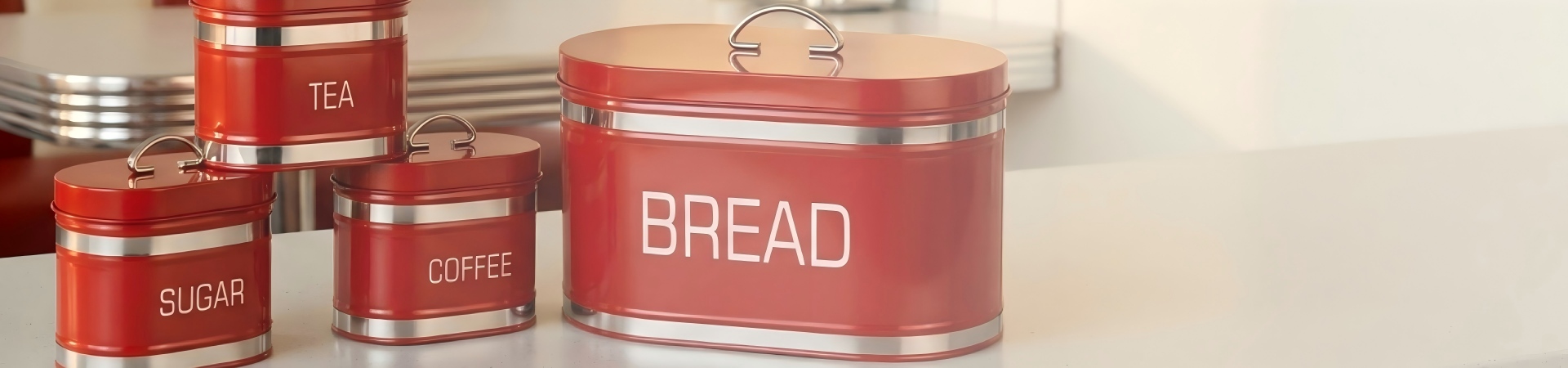
Stackable storage canisters are generally better for modern kitchens with limited shelf and countertop space, while standard canisters offer greater flexibility in shape and placement. For kitchenware brands, the right choice depends on storage efficiency, product design, target customers and retail positioning.
Stackable storage canisters are designed to sit securely on top of one another, often using flat lids, aligned bases or interlocking features. Standard storage canisters may have conventional shapes and lids without specific features for vertical stacking.
For kitchenware importers, wholesalers, retailers and private-label brands, the main difference is how efficiently each design uses available space and how conveniently customers can access stored ingredients.
| Comparison Factor | Stackable Storage Canister | Standard Storage Canister |
|---|---|---|
| Space utilization | Uses vertical space efficiently when properly designed | Depends on shape and available storage area |
| Stacking stability | Designed to support stacking within specified limits | May not be suitable for safe stacking |
| Storage arrangement | Supports organized vertical storage | Offers flexible individual placement |
| Access to contents | Lower containers may need to be moved when stacked | Each container can usually be accessed independently |
| Design requirements | Requires compatible lids, bases and stable geometry | Allows more freedom in shape and lid design |
| Kitchen suitability | Particularly useful for compact kitchens and cabinets | Suitable for varied kitchen layouts |
| Manufacturing considerations | Requires accurate dimensions and stable contact surfaces | Depends on the specific structure and closure |
| Best suited for | Space-conscious storage collections | Traditional, decorative and individually arranged canisters |
Stackability is not determined by shape alone. A square canister is not automatically stackable, and a round canister can also be designed for secure stacking. Lid strength, base geometry and overall stability are the deciding factors.
Stackable storage canisters help maximize vertical storage space, making them useful in kitchens where countertop and cabinet space is limited.
Their main advantages include:
Better use of vertical space: Multiple containers can occupy a smaller horizontal footprint.
Organized storage: Matching canisters can create a consistent arrangement inside cabinets or on shelves.
Reduced countertop clutter: Vertical arrangements can free space for food preparation and frequently used appliances.
Coordinated product collections: Brands can offer compatible containers in different capacities and heights.
Practical storage planning: A well-designed stacking system helps customers organize dry ingredients according to frequency of use.
For example, a private-label kitchenware brand may develop stackable metal canisters for tea, coffee and sugar, allowing customers to organize several ingredients within a compact countertop area.
However, stacking only provides a practical benefit when the containers remain stable and easy to use. Excessive height, heavy upper containers or poorly fitted lids can make the arrangement inconvenient.
Standard storage canisters provide greater freedom in product shape, arrangement and individual access.
Their main advantages include:
Flexible placement: Containers can be arranged independently across countertops, shelves and cabinets.
Broader design options: Manufacturers can develop a variety of shapes, lid structures and decorative details without designing for stacking.
Convenient access: Each container can be reached without moving another container above it.
Individual product appeal: Distinctive silhouettes and finishes can support decorative kitchenware collections.
Simpler stacking requirements: Designs without stacking functions may not need reinforced lids or specialized contact surfaces.
For example, a retailer selling decorative metal canisters may prefer standard models with rounded bodies, contrasting finishes or distinctive handles.
The main limitation is that standard canisters may use more horizontal space when several containers are stored together. They can still be space-efficient if their dimensions match the available storage area.
Stackable canisters generally save more horizontal space when several containers can be arranged vertically without compromising stability or access.
The actual space savings depend on the footprint, height, usable capacity and number of containers.
| Storage Situation | More Suitable Design | Reason |
|---|---|---|
| Narrow countertop | Stackable canister | Reduces the horizontal footprint |
| Tall kitchen cabinet | Stackable canister | Makes better use of vertical space |
| Shallow shelf | Standard or low-profile canister | Height restrictions may limit stacking |
| Frequently accessed ingredients | Standard canister | Allows independent access |
| Organized pantry storage | Stackable canister | Supports structured vertical arrangements |
| Decorative countertop display | Either | Depends on styling and available space |
For B2B buyers, space efficiency should be evaluated using the complete product arrangement rather than a single container.
A useful comparison includes the total footprint of the set, maximum stacking height, clearance needed to open the lids and the amount of usable storage capacity provided.
Stackable canisters can be convenient when customers store less frequently used ingredients in lower-access positions and keep everyday essentials within easy reach.
Standard canisters are often more convenient when every container needs to be accessed independently.
For stackable products, manufacturers should consider:
Whether the upper container remains stable during normal use
Whether the lid can support the intended stacking load
Whether containers slide when placed together
Whether users can remove an upper container comfortably
Whether the design allows adequate clearance for opening and closing
Whether different sizes can be stacked safely together
For standard canisters, the key considerations are opening size, lid operation, grip and ease of cleaning.
The most practical design is not necessarily the one that stores the most containers. It is the one that balances storage capacity with safe handling and convenient access.
Metal canisters can support durable, coordinated Kitchen Storage collections, but their suitability for stacking depends on structural design rather than material alone.
Stainless steel and coated carbon steel are common options for metal kitchen storage products. Each offers different advantages in appearance, corrosion resistance and finishing requirements.
| Material | Potential Advantages | Key Considerations |
|---|---|---|
| Stainless steel | Corrosion resistance and metallic finishes | Grade, thickness, forming and surface finish |
| Coated carbon steel | Flexible colors and coordinated finishes | Coating adhesion, edge coverage and protection against corrosion |
| Plastic | Lightweight construction and design flexibility | Polymer suitability, deformation resistance and stacking strength |
For stackable metal canisters, the lid and base should be designed to distribute loads appropriately. A thin lid that works well on a standard canister may not be suitable for supporting another filled container.
Manufacturers should evaluate the complete structure, including seams, contact surfaces and the weight of the intended contents.
Stackable canisters require consistent dimensions and stable contact surfaces to perform reliably in mass production.
An effective product development process should include:
Design the lid, base or locating features to keep containers aligned and reduce unwanted movement.
Verify that the lid and body can support the specified stacking load without unacceptable deformation.
Control height, width, base dimensions and contact surfaces across production batches.
Evaluate the assembled stack on suitable level surfaces and under defined handling conditions.
Check lid fit, opening access and whether removing one container disrupts the remaining arrangement.
Prevent dents, scratches and deformation during bulk packing, storage and international transportation.
For OEM projects, the maximum recommended stacking load and arrangement should be defined before mass production. These specifications help align product design, inspection procedures and customer expectations.
Stackable canisters can provide stronger functional differentiation when space-saving storage is a priority. Standard canisters can be more suitable when design freedom, individual access and decorative appeal matter more.
For private-label brands, the choice should reflect the target customer's needs and the intended retail price.
Depending on manufacturing capabilities, customization may include:
Container dimensions and capacity
Lid and base geometry
Stackable or interlocking features
Metal type and material thickness
Powder-coated colors and surface finishes
Logo placement and retail packaging
Coordinated sets with different container sizes
Stackable designs may require additional engineering and testing, but the resulting convenience can strengthen their retail appeal. Standard designs may be easier to develop when an existing structure already meets customer requirements.
Before ordering in bulk, buyers should approve samples, confirm stacking compatibility and document the relevant dimensions and quality criteria.
Importers should evaluate the intended storage environment, customer behavior and commercial objectives before selecting a design.
A practical selection process includes:
Identify the target customer: Determine whether space efficiency or independent access is more important.
Measure storage areas: Review typical countertop, shelf and cabinet dimensions.
Compare usable capacity: Assess the total capacity relative to the footprint and height of the arrangement.
Evaluate stability: Check stacking strength, alignment and ease of handling.
Compare production costs: Consider material, tooling, assembly, inspection and packaging.
Validate market demand: Use customer feedback and sales data to assess the preferred design.
For a new product range, offering a standard canister alongside a stackable version may help brands serve customers with different storage needs.
HUAQING specializes in metal homeware manufacturing, including metal kitchen storage products and customized household items for international markets.
For importers, wholesalers, retailers and private-label brands, project discussions can cover canister dimensions, stacking structures, surface finishes, colors, branding and packaging, subject to manufacturing capabilities and project requirements.
Before placing a bulk order, buyers should confirm available designs, customization options, material specifications, minimum order requirements and quality inspection procedures.
Contact HUAQING to discuss your metal storage canister requirements and develop a kitchen storage collection suited to your target market.
Stackable canisters are generally better for maximizing vertical space. Standard canisters may be more convenient when each container needs to be accessed independently.
Yes, if their lids, bases and bodies are designed and tested for the intended stacking load. Not every metal canister is suitable for stacking.
Square canisters can align efficiently, but shape alone does not determine stability. Lid design, base geometry and locating features are also important.
They may require additional structural design, dimensional control and testing. Actual costs depend on the product design, materials, production volume and manufacturing process.
Yes, depending on manufacturing capabilities. Customization may include dimensions, capacity, stacking features, materials, finishes, logos and packaging.