
HUAQING


Email: huaqingwj@21cn.com


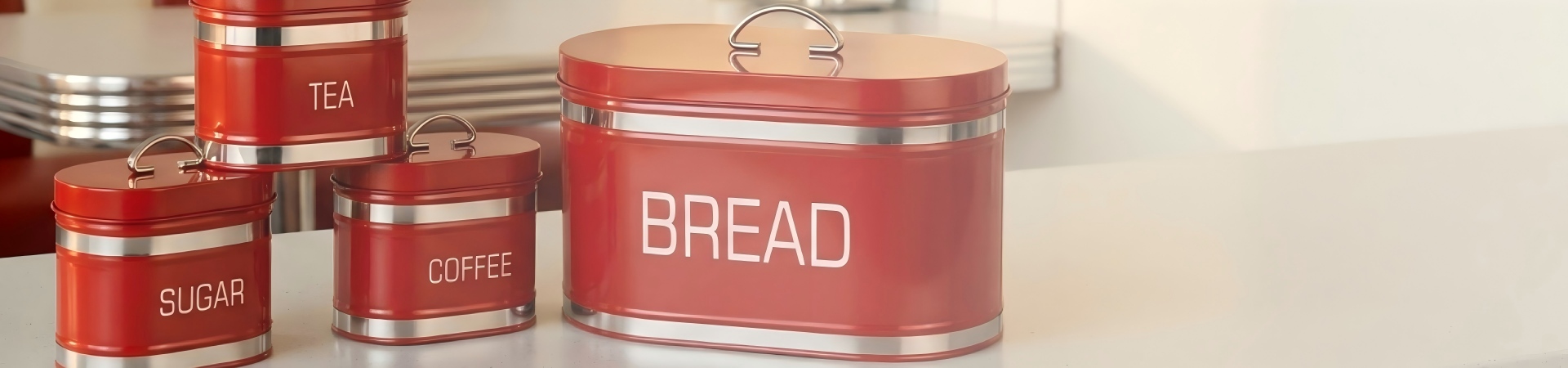
Custom printed metal canisters help brands build stronger visual recognition through logos, graphics and distinctive designs, while plain metal canisters offer a clean, versatile appearance. The better choice depends on brand positioning, target customers, retail strategy and customization costs.
Custom printed metal canisters feature logos, patterns, product information or other graphics applied to their exterior surfaces. Plain metal canisters use an undecorated or minimally finished surface, allowing the material, shape and finish to define their appearance.
For kitchenware importers, wholesalers, retailers and private-label brands, this decision affects brand recognition, product differentiation, manufacturing costs and retail presentation.
| Comparison Factor | Custom Printed Metal Canister | Plain Metal Canister |
|---|---|---|
| Brand recognition | Supports prominent logos and recognizable graphics | Relies more on shape, finish and separate labeling |
| Product appearance | Offers greater visual customization | Provides a clean, understated look |
| Design flexibility | Supports brand-specific colors, patterns and graphics | Focuses on material, shape and surface finish |
| Retail positioning | Suitable for branded collections and promotional products | Suitable for minimalist and versatile kitchenware |
| Manufacturing requirements | Requires printing setup and artwork control | May require fewer decoration steps |
| Initial development | May involve artwork preparation and print setup | Often simpler when an existing design is used |
| Product differentiation | Can create a distinctive visual identity | May look similar to competing products |
| Best suited for | Private-label brands and established product lines | Neutral homeware collections and flexible resale |
Neither option is universally better. Custom printing is most valuable when the artwork supports a clear brand strategy, while plain canisters can be effective when simplicity, flexibility and cost control are the main priorities.
Custom printing allows a brand to place recognizable visual elements directly on a product customers use regularly. This can strengthen brand recognition and make a product range more distinctive.
Key advantages include:
Consistent brand presentation: Logos, brand colors and graphic elements can match other products in the collection.
Product differentiation: Distinctive artwork helps separate a canister from similar products in the market.
Stronger shelf recognition: Clear visual branding can help customers identify a product within a crowded retail display.
Collection development: Matching printed designs can connect spice canisters, storage canisters and other metal kitchen accessories.
Promotional flexibility: Artwork can be adapted for seasonal collections, special editions or market-specific product lines.
For example, a private-label kitchenware brand may use a consistent logo and color palette across metal coffee, tea and sugar canisters. This creates a recognizable collection rather than a group of unrelated storage products.
However, printing alone does not create a strong brand identity. The design should remain consistent with the brand's positioning, customer expectations and overall product quality.
Plain metal canisters appeal to buyers who prefer understated designs or want products that can be marketed under different brands.
Their main advantages include:
Timeless appearance: Simple metal surfaces can complement a wide range of kitchen styles.
Greater visual flexibility: Neutral products can fit different retail collections without prominent graphics.
Potentially lower decoration costs: Avoiding custom printing may reduce setup and processing expenses.
Simpler inventory management: A neutral design may be easier to sell across different markets and customer groups.
Flexible branding options: Buyers may add compatible labels, packaging or other branding elements separately.
For example, a wholesaler supplying several retailers may prefer plain metal canisters that can be sold under different store identities or incorporated into different kitchenware assortments.
The trade-off is that plain products may be harder to distinguish from competing designs, particularly when several suppliers offer similar shapes and finishes.
Custom printed canisters are generally more suitable when a brand wants a recognizable product identity. Plain canisters can be more practical when the buyer needs a flexible product that can serve multiple customers or markets.
| Brand Requirement | Recommended Option | Reason |
|---|---|---|
| Building a recognizable product line | Custom printed | Displays consistent brand elements |
| Selling under multiple retail brands | Plain or separately branded | Allows flexible market positioning |
| Launching a distinctive product collection | Custom printed | Supports brand-specific graphics |
| Testing demand with limited development investment | Plain | May avoid custom artwork and printing setup |
| Creating coordinated Kitchen Storage sets | Either | Depends on whether graphics or unified finishes define the collection |
| Developing seasonal products | Custom printed | Supports theme-specific artwork |
| Maintaining a minimalist appearance | Plain | Keeps the focus on material and form |
For brands entering a new market, a practical strategy is to test an existing plain canister first and introduce custom printed versions when customer demand and brand positioning become clearer.
Established brands may benefit more directly from custom printing because customers already recognize their visual identity.
Custom printed metal canisters often involve additional costs for artwork preparation, printing setup, color matching and production inspection. The actual difference depends on the printing method, design complexity, order quantity and surface requirements.
Important cost factors include:
Artwork preparation: Files may need to be adapted to the canister's dimensions and surface geometry.
Printing method: Different techniques have different setup costs, production speeds and durability characteristics.
Number of colors: Complex artwork may require additional process control.
Order quantity: Setup costs can have a greater impact per unit on smaller orders.
Surface preparation: The metal finish must be compatible with the selected printing method.
Quality inspection: Printed products require checks for alignment, color consistency and visible defects.
Plain canisters may reduce decoration-related expenses, but the final cost still depends on material, thickness, forming, finishing and packaging.
For B2B buyers, comparing unit prices alone can be misleading. A useful quotation comparison should include setup charges, sampling, packaging, order quantity and expected production waste.
The most suitable printing method depends on the metal surface, artwork, required durability, order volume and target price.
Potential options include:
Screen printing: Can suit certain logos and graphic designs, depending on the surface and production requirements.
Offset or transfer-based decoration: May be suitable for specific metal packaging formats and production setups.
Digital printing: Can support detailed graphics and selected short-run applications where compatible with the substrate and finishing process.
Labels: Provide a flexible alternative when direct printing is unnecessary or the product design may change frequently.
Not every method is suitable for every canister. Curved surfaces, textured finishes, coating chemistry and handling conditions can affect print quality and adhesion.
Before mass production, buyers should confirm the available process with the manufacturer and evaluate a production-representative sample.
Branding consistency depends on more than reproducing the same logo file. Surface preparation, artwork placement, color control and inspection procedures all influence the finished product.
A practical quality-control process includes:
Artwork approval: Confirm the final logo, graphics, dimensions and placement.
Color specification: Document color references and acceptable production tolerances.
Sample review: Approve a sample produced using the intended material, surface finish and printing process.
Adhesion evaluation: Check that the print is suitable for the expected handling and cleaning conditions.
Appearance inspection: Review alignment, color consistency, smudges, missing details and other visible defects.
Packaging verification: Ensure that products are protected against scratches and surface damage during transportation.
For international orders, a documented approval process helps buyers and manufacturers maintain consistent branding across repeat production runs.
The printing method and performance requirements should also match the product's intended use. A decorative canister may have different requirements from a container subject to frequent washing or heavy handling.
Yes. A plain metal canister can support premium positioning through material selection, precise construction, refined surface finishes and coordinated product design.
A brushed stainless steel finish, carefully controlled matte coating or distinctive body shape can create a recognizable appearance without extensive graphics.
Plain canisters can also support understated branding through small logos, embossed details, hangtags or customized packaging.
For premium kitchenware brands, the absence of prominent printing can be a deliberate design choice rather than a limitation.
The key is consistency. Material quality, lid fit, finish uniformity and packaging should support the intended retail price and customer expectations.
HUAQING specializes in metal homeware manufacturing, including metal kitchen storage products and customized household items for international markets.
For importers, wholesalers, retailers and private-label brands, project discussions can cover canister dimensions, metal specifications, surface finishes, colors, printed graphics, logo placement and packaging, subject to manufacturing capabilities and project requirements.
Before placing a bulk order, buyers should confirm available printing methods, artwork requirements, minimum order quantities, sample approval procedures and quality inspection standards.
Contact HUAQING to discuss your custom metal canister requirements and develop a product that reflects your brand identity and target market.
They can be more effective because logos, colors and graphics appear directly on the product. Their impact depends on design consistency, visibility and how well the artwork matches the target audience.
They may cost less when custom decoration involves additional setup and processing. Actual savings depend on the printing method, order quantity, finish and product specifications.
Yes, depending on the canister material, surface finish and available manufacturing processes. Buyers should confirm artwork requirements and approve a sample before mass production.
Printing can introduce additional performance considerations, including adhesion, abrasion resistance and cleaning compatibility. Durability depends on the printing method, surface preparation and intended use.
Buyers should provide dimensions, material requirements, logo files, artwork, preferred colors, order quantity and packaging specifications. Reference images and clear quality requirements can improve quotation accuracy.