
HUAQING


Email: huaqingwj@21cn.com


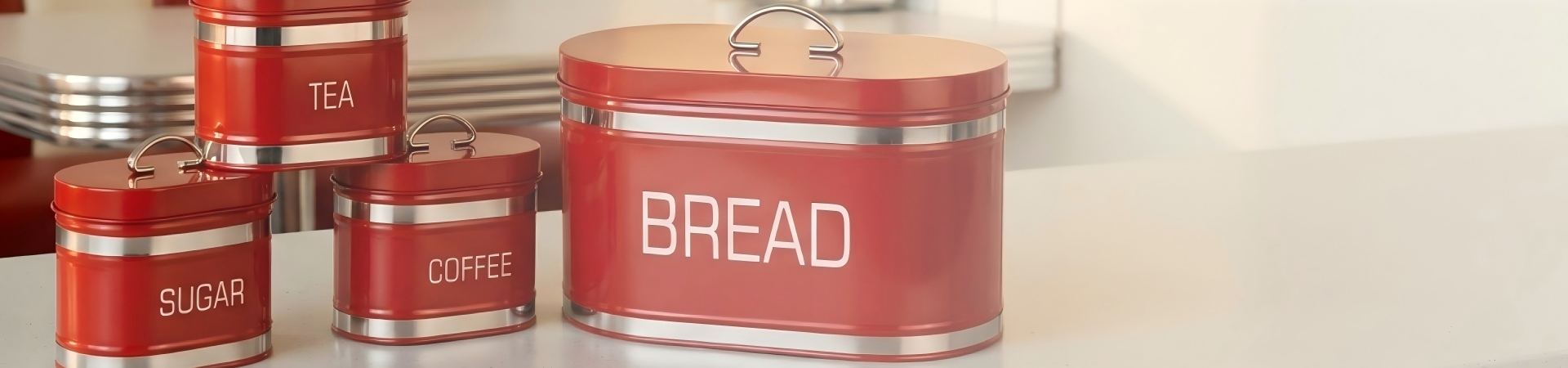
Household storage products have become a stable and expanding category in global kitchen and pet-related retail markets. Among the most frequently sourced items are kitchen Canister Sets and pet food storage bins. Although both belong to the broader storage segment, their demand cycles, usage behavior, and procurement patterns differ significantly, especially in long-term replenishment scenarios.
For importers managing continuous supply programs, understanding repeat demand drivers is essential for inventory planning and OEM strategy development.
Kitchen canister sets are primarily used for dry food storage such as sugar, coffee, flour, and grains. Their replacement cycle is relatively long, typically driven by kitchen renovation, design updates, or retail bundling strategies rather than product failure.
Pet food storage bins, however, are tied directly to consumption cycles of pet ownership. According to global pet industry consumption data, over 60 percent of households with pets replenish food storage containers within 18 to 24 months due to increased capacity needs or hygiene replacement cycles.
This creates a clear difference:
Kitchen canisters = low-frequency replacement, design-driven demand
Pet food bins = medium to high-frequency replacement, usage-driven demand
Kitchen canister sets are typically produced using stainless steel, glass, or coated metal depending on market positioning. Metal versions undergo stamping, welding, polishing, and sealing assembly, with emphasis on aesthetic consistency and airtight performance.
Pet food storage bins are usually manufactured using food-grade polypropylene or high-density polyethylene combined with sealing lid systems. Injection molding is the core production method, enabling high-volume output and flexible sizing.
Industrial production benchmarks indicate:
Injection molding cycle time for plastic bins is typically 30–60 seconds per unit
Metal canister production requires multiple finishing stages, increasing production time by 25–40 percent
This difference directly affects scalability for bulk supply programs.
Kitchen canister sets require inspection of:
Airtight sealing performance
Lid alignment and fit tolerance
Surface finishing consistency
Corrosion or coating resistance for metal variants
Pet food storage bins require:
Food-grade material compliance testing
Lid locking pressure resistance
Odor retention prevention tests
Load capacity verification under full-fill conditions
In export-oriented manufacturing, defect rates for injection-molded storage bins are generally lower due to automated molding stability, while metal canister sets require more manual inspection steps to ensure finish consistency.
Repeat demand is a key differentiator between these two product categories.
Market analysis across household goods distribution channels shows:
Pet-related storage products have approximately 1.6 to 2.2 times higher repurchase frequency compared to kitchen dry storage containers
Kitchen canister sets have stronger seasonal spikes linked to home furnishing trends and retail promotions
Pet food storage bins show more stable year-round replenishment demand due to functional necessity
| Factor | Kitchen Canister Set | Pet Food Storage Bin |
|---|---|---|
| Replacement Frequency | Low | Medium to High |
| Demand Driver | Aesthetic & kitchen updates | Functional necessity |
| Market Stability | Seasonal | Continuous |
| Customization Focus | Design & finish | Capacity & durability |
From a supply chain perspective, pet food storage bins offer higher efficiency in bulk logistics due to stackable injection-molded structures and lighter weight per unit. This reduces shipping volume and container cost per unit.
Kitchen canister sets, especially metal versions, require more protective packaging to prevent surface scratches and deformation during transit. This increases packaging material usage and overall freight sensitivity.
Logistics benchmarking shows plastic storage bins can reduce volumetric shipping cost by 20–30 percent compared to metal household storage products under similar order volumes.
Kitchen canister sets, particularly those used for food storage, must comply with food contact material regulations such as heavy metal migration limits and corrosion resistance standards.
Pet food storage bins must meet food-grade plastic certification requirements, ensuring safe storage without chemical contamination or odor transfer. Export markets such as Europe and North America require compliance with REACH, FDA, and LFGB standards depending on product material classification.
From a sourcing strategy perspective, working directly with a manufacturer enables better control over mold development, material formulation, sealing system design, and cost structure optimization.
OEM and ODM cooperation allows:
Custom capacity design for pet food bins
Airtight lid engineering for canister sets
Surface finish customization for retail branding
Packaging adaptation for shelf display optimization
Traders generally offer faster sourcing but limited engineering flexibility and less stable long-term pricing control across repeated production cycles.
Key evaluation criteria include:
Material certification and traceability
Sealing system durability testing
Injection molding consistency or metal forming precision
Packaging strength for export logistics
OEM branding flexibility and mold customization capability
Production capacity for continuous replenishment programs
With long-term specialization in Kitchen Storage and household metal hardware production since 2006, Jiangmen Huaqing Hardware Industrial Co., Ltd. integrates stamping, forming, injection molding coordination, finishing, and assembly under a structured production system.
This enables stable OEM and ODM supply for both kitchen canister sets and pet food storage bins, supporting diversified global distribution needs across retail and private label programs.
Kitchen canister sets and pet food storage bins serve different demand mechanisms within the household storage category. Kitchen canisters are driven by design cycles and retail positioning, while pet food storage bins demonstrate stronger repeat demand driven by functional consumption behavior.
For importers, the optimal choice depends on whether the sourcing strategy prioritizes design turnover or continuous replenishment volume.